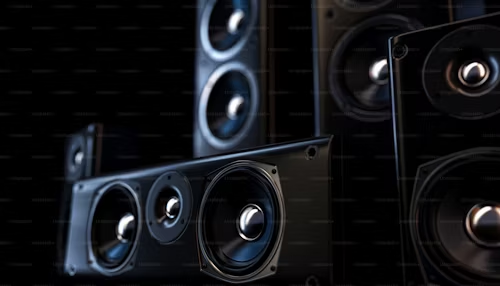
Outdoor live events present a unique set of acoustic and logistical challenges that distinguish them from indoor concerts. A live event sound speaker used for outdoor venues must overcome environmental variables—wind, temperature gradients, and reflective absence—while delivering consistent coverage to large, dispersed audiences. From municipal festivals and touring concerts to stadium events and open-air theater, event organizers demand sound systems that provide clarity, impact, and intelligibility across wide listening areas. In this context, the choice and design of a live event sound speaker become mission-critical.
Historically, achieving even coverage outdoors required larger numbers of bulky cabinets, complex delay lines, and significant amplification. Modern advances in transducer technology, horn-loading geometry, and acoustic modeling allow a single, well-engineered live event sound speaker to project further and more accurately than earlier generations. Nevertheless, the physical fundamentals remain: a speaker for outdoor live events needs sufficient sound pressure level (SPL) capability to overcome ambient noise, high sensitivity to maximize amplifier efficiency, and optimized projection to maintain intelligibility over distance. Lase Sound approaches system design by combining these fundamentals with practical deployment considerations—transportability, rigging safety, and scalable arraying—to deliver a live event sound speaker that performs reliably in the demanding conditions of open-air productions.
A successful outdoor installation also considers redundancy and serviceability. For any major festival or tour, a live event sound speaker must be maintainable on-site, with modular components and clear access to critical parts. This reduces downtime and keeps events on schedule. In short, outdoor venues require a holistic approach: acoustic performance, durability, and operational logistics must be engineered together around the live event sound speaker concept.
When evaluating a live event sound speaker for outdoor use, three core product features determine suitability: high sound pressure level (SPL), high sensitivity, and long-throw projection. Each attribute interacts with the others to define real-world performance.
High Sound Pressure Level (SPL). Outdoor spaces have higher ambient noise and lack the reflective surfaces that help indoor venues. A live event sound speaker must produce sufficiently high SPL at listening positions to ensure clarity and dynamic impact. High SPL capability is not merely about maximum output; it must be achieved with low distortion across the useful bandwidth. Systems designed with robust low-frequency drivers, efficient enclosures, and controlled dispersion ensure that the live event sound speaker delivers impactful bass and full-spectrum presence without overheating or introducing nonlinear distortion under prolonged use.
High Sensitivity. Sensitivity addresses how effectively a live event sound speaker converts electrical power into acoustic output. A high-sensitivity speaker design means more SPL for a given amplifier power, which leads to reduced amplifier count, simplified power logistics, and lower thermal stress on amplification racks. For touring outdoor events, a live event sound speaker with high sensitivity reduces the footprint of the PA system while preserving headroom and dynamics—critical for live music where transient peaks and dynamic range are prized.
Long-Throw Projection. The ability of a live event sound speaker to project energy over long distances with controlled dispersion depends on horn design, waveguide geometry, and transducer placement. Optimized horns and high-frequency drivers produce coherent wavefronts that maintain focus at distance, minimizing mid-field drop-off and ensuring intelligible vocals and instrument timbres. For large outdoor stages, a live event sound speaker with excellent projection reduces the need for excessive fills and complicated delay towers, simplifying setup and improving consistency across listening zones.
Beyond these primary features, practical considerations—weatherproofing, rigging points, and modular servicing—complete the product profile. A reliable live event sound speaker includes sealed enclosures, corrosion-resistant hardware, and easily replaceable components, enabling swift repairs during festivals or multi-day events. Lase Sound’s engineering philosophy integrates these performance and durability characteristics into each speaker model meant for outdoor live events.
To illustrate how the above features manifest in practice, consider a high-profile outdoor music festival with a main stage audience area extending 200 meters from stage to the rear. The production brief requires clear vocal intelligibility, impactful low end for electronic acts, and even coverage to the outer perimeter while minimizing sound spill to adjacent neighborhoods. Here, the selection and deployment of the live event sound speaker are pivotal.
System concept and objectives. The festival’s design team chose an arrayed main PA consisting of three hangs per side, each hang built around a high-SPL, high-sensitivity live event sound speaker module. The objective was to achieve a consistent on-axis SPL across the audience with minimal reliance on delay towers. Because each live event sound speaker in the array offers exceptional sensitivity, the production could reduce amplifier channels and focus on providing ample headroom, preserving dynamic fidelity for peak passages without audible compression.
Coverage and projection. The live event sound speaker’s horn-packed high-frequency section provided tight vertical control, minimizing spill over the front couple and focusing energy into the listening plane. Mid/high coherence meant vocals maintained presence at 150–200 meters, reducing the need for additional mid-field reinforcement. Low-frequency cabinets paired with the main modules delivered controlled bass that articulated during fast electronic transients; the high SPL capability ensured the bass remained musical rather than muddy even at high levels.
Operational efficiency. High sensitivity of the live event sound speaker meant fewer amplifiers and lighter power distribution, a notable logistic win in festival environments where power capacity and cable runs are constrained. Furthermore, because each speaker sustained long-term SPL demands without thermal limiting, the technical team faced fewer interruptions. Modular link panels and quick-release rigging reduced the time needed to swap a faulty module—critical during tight changeovers.
Neighborhood impact and compliance. Controlled projection characteristics of the live event sound speaker helped limit off-site sound levels. Focused energy and predictable throw allowed the sound team to aim the arrays precisely, meeting local noise ordinances while maintaining robust front-of-house SPL. This balance between audibility and off-site restraint is one of the defining tasks for outdoor systems and is directly enabled by the speaker’s design.
Outcome. The festival achieved consistent clarity and power across the audience, with vocal intelligibility and punchy bass preserved throughout the program. The reliability of the live event sound speaker modules reduced maintenance incidents and simplified logistics—validating the selection criteria of high SPL, sensitivity, and projection.
A reliable live event sound speaker for outdoor venues combines high SPL capability, elevated sensitivity, and exceptional projection to meet the rigors of live performance. These technical attributes translate into fewer amplifiers, improved headroom, precise coverage, and lower lifecycle operational costs. For production managers and sound designers, prioritizing these characteristics in speaker selection yields measurable benefits: improved intelligibility, dynamic range preservation, and logistical efficiency.
When specifying a live event sound speaker, request measured performance data: sensitivity (dB/1W/1m), maximum continuous SPL, and directivity index across the operating band. Evaluate real-world throw performance with array simulation tools and insist on weatherproofing standards appropriate to your tour or venue. Finally, prioritize modularity and serviceability—field-replaceable components and clear rigging solutions reduce risk during festivals and touring schedules.
At Lase Sound we emphasize integrated design: marrying transducer innovation with precision horn engineering and practical deployment features to produce a live event sound speaker that performs reliably under the most demanding outdoor conditions. By focusing on the core attributes discussed here, audio professionals can choose systems that deliver both the power and the finesse required for successful outdoor live events.


 EN
EN

 Hot News