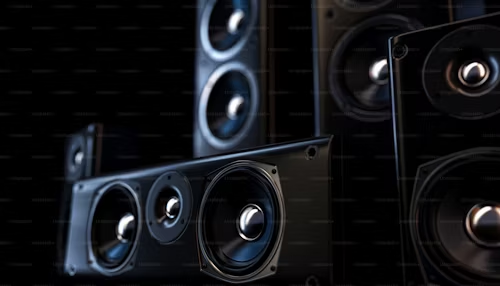
A subwoofer speaker is a loudspeaker specifically designed to reproduce the lowest band of the audio spectrum — the sub-bass frequencies that give music and effects their palpable weight and physical impact. In professional audio contexts, a subwoofer speaker complements full-range loudspeakers by taking on frequencies typically below 80 Hz and, in purpose-built systems, down to 20–35 Hz. This specialization requires a different mechanical and electrical design than mid-high drivers: larger voice coils, stiffer motor structures, and enclosures optimized for low-frequency loading.
A professional subwoofer speaker for fixed installations or live events must balance several demands: deep low-frequency extension, high continuous power handling, controlled directivity (to avoid unwanted room modes), and high sound-pressure-level (SPL) capability for dynamic peaks. Unlike consumer subs, professional subwoofer speaker designs emphasize reliability, serviceability, and predictable behavior across long operating periods. Touring systems place additional requirements on rigging points, modularity, and transportability.
In practice, system designers use subwoofer speaker arrays, cardioid configurations, or distributed sub arrays to manage low-frequency coverage and reduce spill to undesired zones. In fixed installations — theaters, clubs, or houses of worship — subwoofer speaker placement and room coupling are often tuned to integrate with architectural acoustics. For outdoor live events, subwoofer speaker selection emphasizes power handling and throw, ensuring bass energy reaches the audience without distortion.
At Lase Sound we treat the subwoofer speaker as the foundation of the low-end system: it must deliver both the felt and heard bass while integrating with amplification, processing, and monitoring systems to preserve fidelity and maintain operational robustness throughout the event lifecycle.
When evaluating a professional subwoofer speaker, three product features are central: deep low-frequency extension, high power-handling capability, and strong SPL output. Each attribute interrelates with the others and influences system configuration decisions.
Deep low-frequency extension. A high-performance subwoofer speaker reproduces content down into the infrasonic band (20–35 Hz) without losing control. This requires a combination of large excursion drivers, optimized enclosure volume or horn loading, and careful thermal management. Horn-loaded subwoofer speaker designs gain efficiency and projection, while sealed and bandpass designs offer tighter transient control. The application—dance club, cinema, or stadium—determines which architecture best serves the project.
High power handling. Professional subwoofer speaker units must sustain substantial RMS power and withstand transient peaks without thermal or mechanical failure. Ratings should be assessed in RMS and program terms, but equally important are the cooling mechanisms, voice-coil design, and suspension durability. For touring live events, a subwoofer speaker must survive repeated high-energy usage and handling. For fixed installs, long-term thermal stability and predictable aging are priorities.
High SPL capability. Achieving high sound pressure levels with minimal distortion is the hallmark of a reliable subwoofer speaker. High sensitivity combined with robust excursion capability allows a unit to deliver impactful, clean bass. Peak SPL performance must be verified across the usable bandwidth: a subwoofer speaker that clips or compresses during musical peaks will undermine the entire system’s perceived quality.
Other critical product qualities include cabinet rigidity, weatherproofing for outdoor-rated subwoofer speaker models, and rigging/flying options for flown arrays. Equally significant are the integration features—dedicated DSP presets, speaker protection, and monitoring telemetry—that let technicians optimize crossover points, phase, and delay so the subwoofer speaker coheres with main loudspeakers.
Finally, a professional subwoofer speaker should be serviceable: replaceable transducers, accessible crossover components, and clear diagnostic indicators minimize downtime. At Lase Sound we design subwoofer speaker products with these operational realities in mind, enabling systems that perform reliably day after day.
Configuring a subwoofer speaker system requires an approach that addresses acoustics, power, integration, and safety. Below is a systematic workflow that applies to both fixed installations and live-event touring, with detail on design choices and practical setup steps.
Assessment and system goals. Define target SPL, frequency extension, coverage area, and acceptable off-site leakage (noise constraints). For a nightclub, a subwoofer speaker system may prioritize extreme low extension and tactile energy; for theatrical installations, clarity and controlled reverberation are key. These objectives determine the number and type of subwoofer speaker modules required.
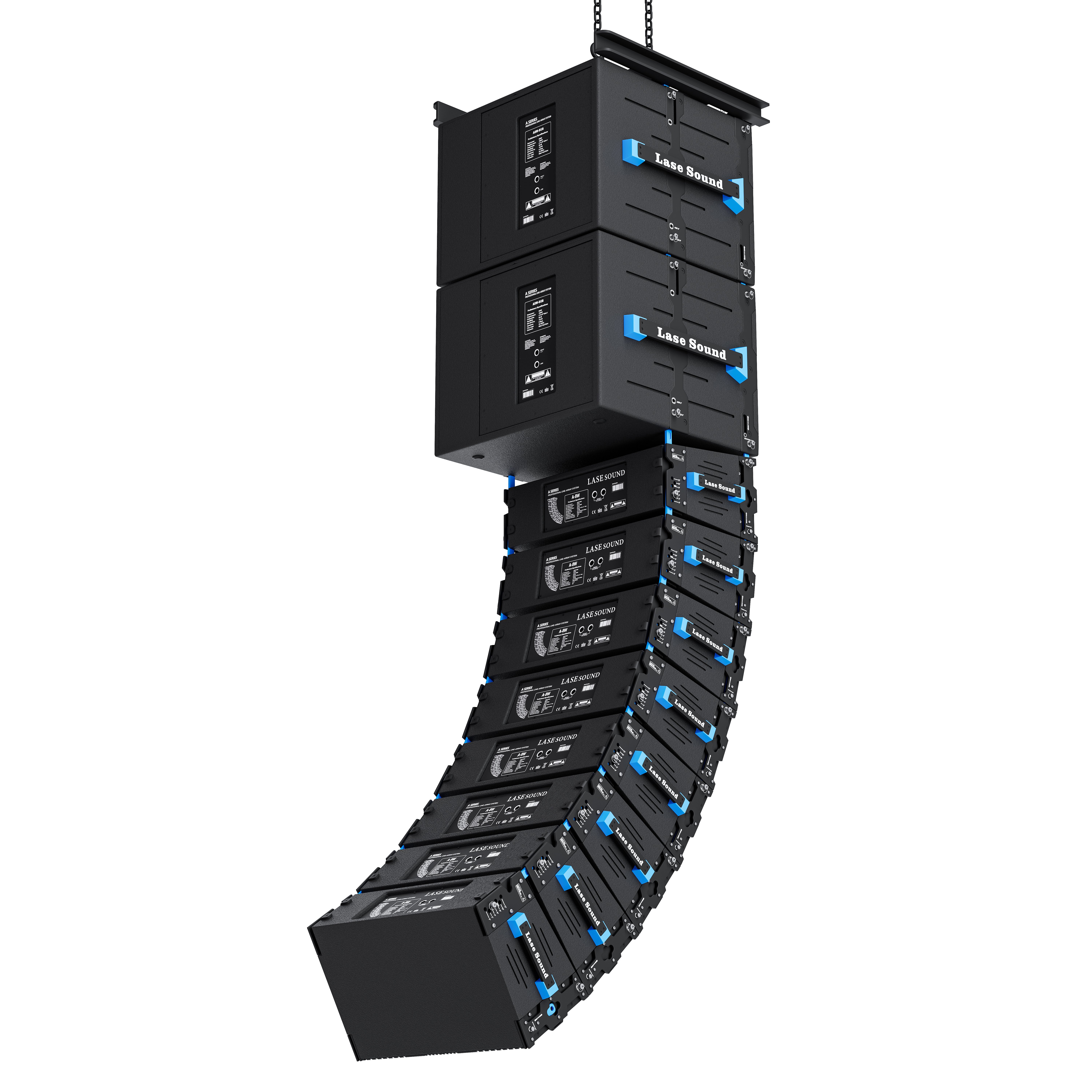
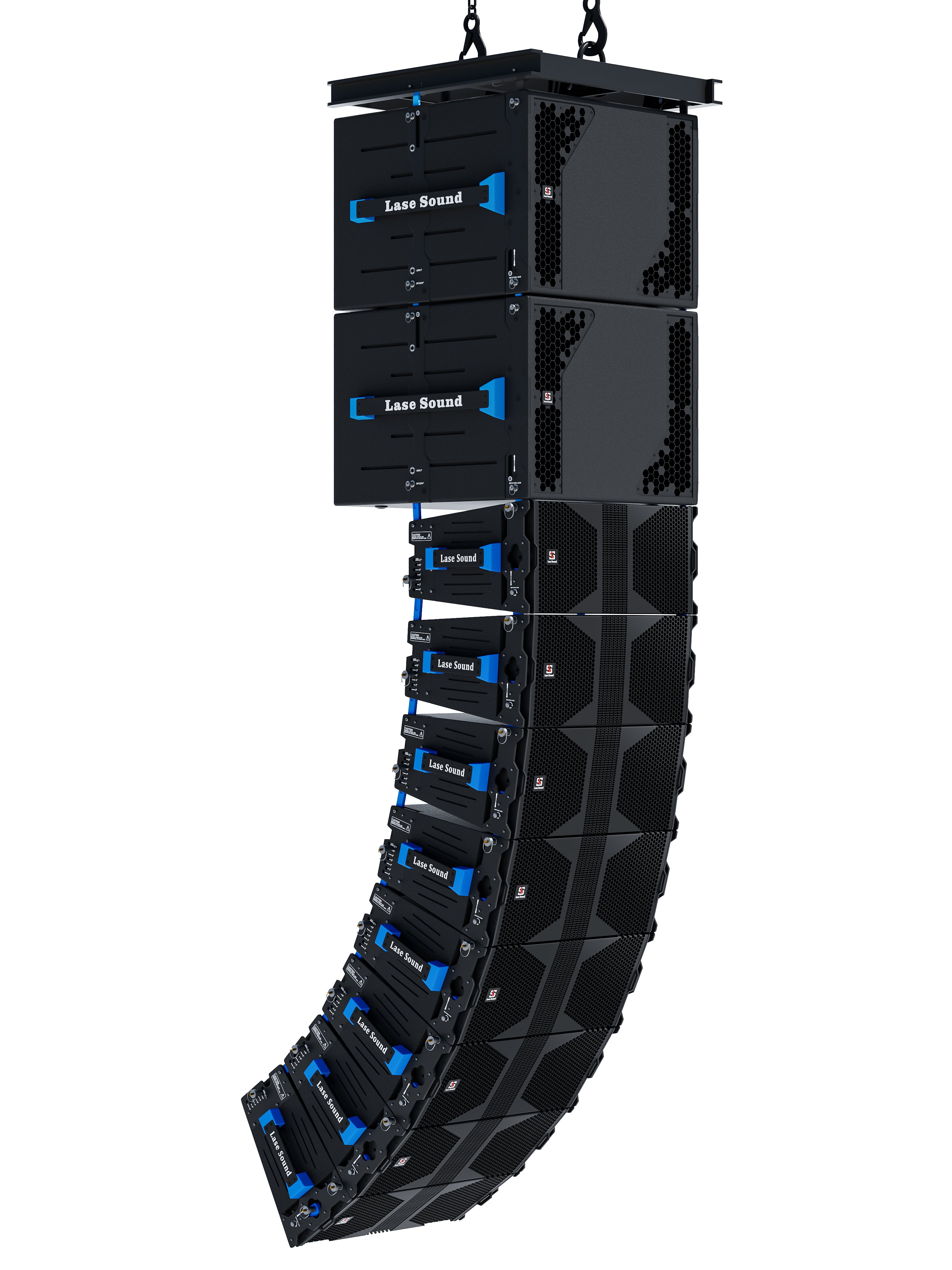
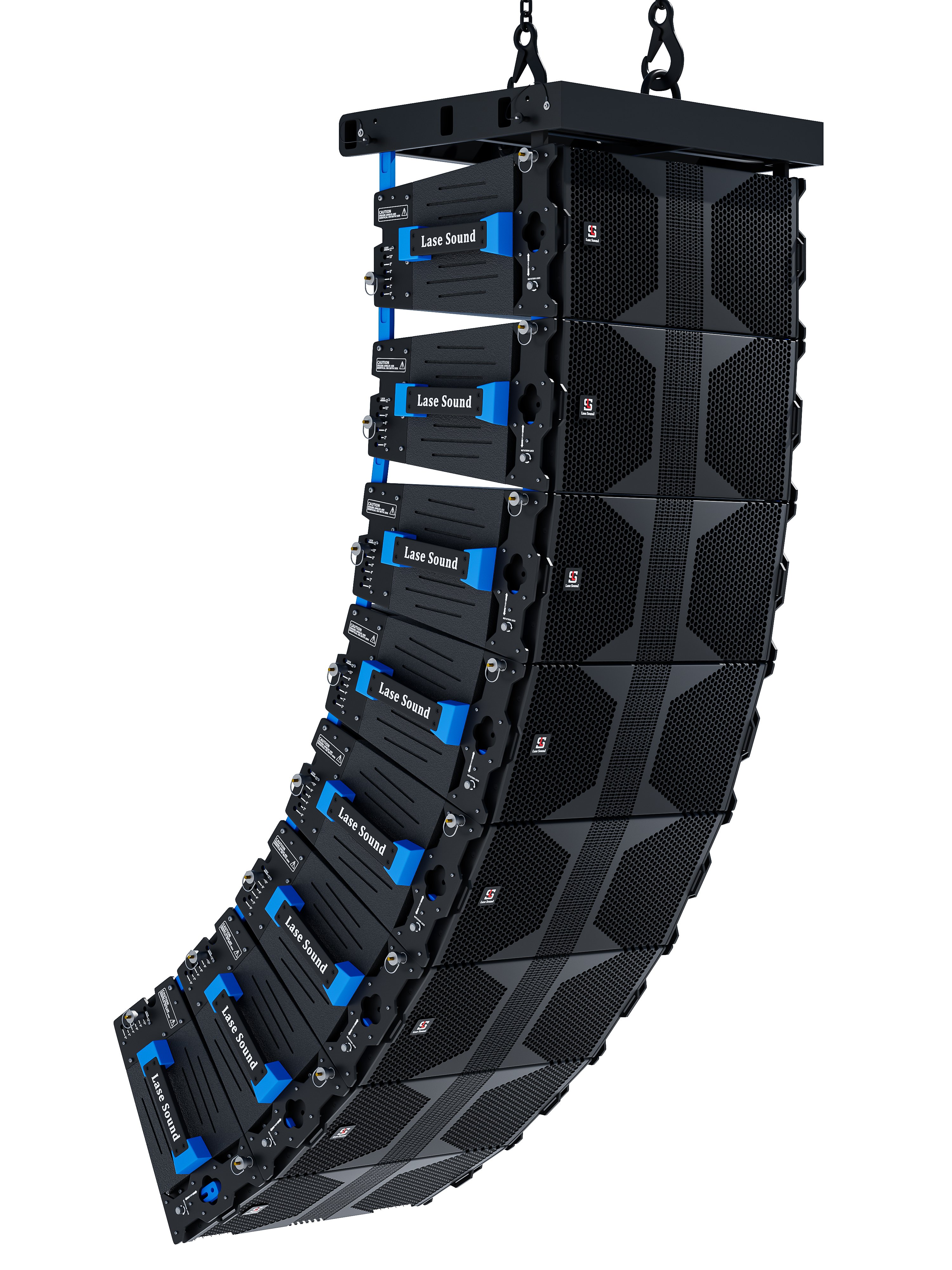
Design topology. Choose between centralized sub stacks, flown arrays, and distributed sub arrays. A centralized ground-stack of multiple subwoofer speaker cabinets typically yields maximum SPL for outdoor stages and straightforward cardioid tuning. Flown subwoofer speaker arrays can improve long-throw projection and match the height of the main arrays, supporting consistent bass at distance. Distributed subwoofer speaker systems — placing lower-power subwoofer speaker units across the venue — work well for large indoor arenas to smooth room modes and reduce peaks and nulls.
Cardioid and end-fire techniques. For both fixed installs and live events, directional control of low frequencies using cardioid subwoofer speaker arrays reduces stage bleed and neighborhood impact. Configure delay and polarity between front-facing and rear-facing subwoofer speaker elements to create source–cancellation behind the array. End-fire arrays use time-delay spacing between subwoofer speaker modules to focus energy forward and reduce rearward radiation. Modeling software helps predict performance before deployment.
Crossover and processing. Set subwoofer speaker crossovers low enough to preserve LF content without overloading main speakers—commonly between 60 and 100 Hz depending on mains capability. Use steep, linear-phase filters if cohesion between subwoofer speaker and mains is critical. Apply dynamic limiting and look-ahead protection to prevent driver overload. Phase alignment through delay and polarity checks is crucial: a time-aligned subwoofer speaker blends into the system unobtrusively.
Amplification and power management. Size amplifiers to provide adequate continuous power with headroom for peaks. High-quality, low-impedance drive and stable power supplies reduce thermal stress on subwoofer speaker drivers. For touring, redundancy in amplification and distributed power sources helps maintain uptime.
Placement and tuning. For fixed installs, physical positioning of subwoofer speaker units relative to walls and seating areas directly affects modal excitation. Corner loading increases efficiency but can create booming; alternative placements and multiple small subwoofer speaker units distributed across the room often yield smoother response. For live events, ground-stacks near stage centers or flown subwoofer speaker arrays with delay-fed fills provide predictable coverage. Measurement with calibrated microphones and real-time analyzers allows iterative EQ, delay, and level optimization.
Operational considerations. Ensure rigging safety, accessible replacement parts, and weatherproofing for outdoor subwoofer speaker models. Implement monitoring and telemetry for long run events so technicians can spot thermal or excursion anomalies early. Finally, document presets for different venue modes (e.g., speech, music, EDM) so the subwoofer speaker behavior matches programming.
A professional subwoofer speaker system delivers the visceral low-frequency performance that defines modern live events and immersive fixed installations. Selecting and configuring the right subwoofer speaker involves matching product architecture—horn-loaded vs. sealed, high-power vs. efficient design—with a coherent system plan that includes array topology, cardioid techniques, crossover strategy, and robust amplification.
Key decisions—how many subwoofer speaker units to deploy, whether to fly or ground-stack, and how to manage directional control—should be driven by measurable goals: target SPL, frequency extension, audience area, and regulatory constraints. Practical deployment then depends on accurate modeling, iterative measurement, and conservative protection schemes to preserve driver longevity.
At Lase Sound we design subwoofer speaker products and system workflows for reliability and sonic fidelity. Our approach emphasizes predictable low-end behavior, serviceability, and integration tools that let engineers tune systems to their venue’s acoustic realities. When properly specified and configured, a subwoofer speaker system becomes the foundation of a powerful, controlled, and engaging listening experience—one that audiences feel as much as they hear.


 EN
EN

 Hot News