Over the past two decades, line array speaker technology has fundamentally reshaped professional audio, offering precise sound coverage and high-fidelity reproduction over long distances. According to the International Audio Engineering Association, the line array has become the standard solution for modern concert venues, theaters, stadiums, and houses of worship. While powered (active) line arrays are increasingly popular due to their integrated amplification and simplified deployment, passive line array speakers continue to hold a critical position in fixed installations and touring systems because of their engineering advantages, operational flexibility, and long-term reliability.
For audio engineers, systems integrators, and rental companies, understanding the strategic benefits of passive line array speakers is essential. Unlike all-in-one powered units, passive systems allow independent matching of amplifiers, crossovers, and controllers, providing greater control over sound quality, scalability, and lifecycle costs. Guangzhou LASE SOUND Co., Ltd. leverages this approach to deliver solutions tailored for high-end installations and professional touring applications, emphasizing both performance and operational value.
One of the primary advantages of passive line array speakers lies in their flexibility during system design.
Fixed Installation: In theaters, arenas, and large churches, passive arrays allow amplifiers to be centralized in climate-controlled machine rooms. Speakers can then be connected via long speaker lines, optimizing cooling, maintenance access, and reducing electronic noise interference. The system can scale easily by adding additional speaker cabinets without replacing amplifiers, enabling precise acoustic tailoring for irregular architectural spaces.
Touring Applications: Touring companies benefit from the ability to drive multiple array configurations from a single high-quality amplifier rack. Main, side, and front-fill arrays can share amplification resources, allowing high equipment reuse, reduced transport weight, and flexible stage setups.
Reliability is crucial for both fixed and mobile applications, particularly in high-stakes performance environments.
Fixed Installations: Separating amplifiers from speakers improves heat management, reduces thermal stress on transducers, and increases long-term operational stability. Passive arrays can operate continuously over years without performance degradation.
Touring Applications: Modular separation of amplifier and speaker units allows for rapid fault diagnosis. Faulty speaker cabinets or amplifier channels can be replaced individually without dismantling the entire system. This drastically reduces downtime during live shows, providing operational certainty for production teams.
Without internal amplification, passive line array speakers are lighter, which has significant advantages for rigging and transportation:
Lower cabinet weight reduces the risks associated with high-angle suspension and eases the labor required for installation.
Transportation logistics are simplified, allowing more units to fit in trucks and reducing costs per tour or venue deployment.
Lighter cabinets also facilitate precise placement and aim during system tuning, enhancing sound coverage without overburdening structural rigging points.
Passive systems offer unmatched flexibility when upgrading or replacing system components:
Fixed Installations: Amplifiers and processors can be independently updated to the latest generation (e.g., switching to D-class amplifiers or advanced DSP units) without discarding the speaker array itself. This maximizes the long-term value of the investment.
Touring Applications: Amplifiers and controllers can serve multiple speaker models, standardizing rental inventory and minimizing redundant purchases. This approach reduces total cost of ownership and supports OEM partners in providing custom-branded or client-specific solutions without altering core hardware.
Passive line array speakers exemplify professional-grade audio engineering.
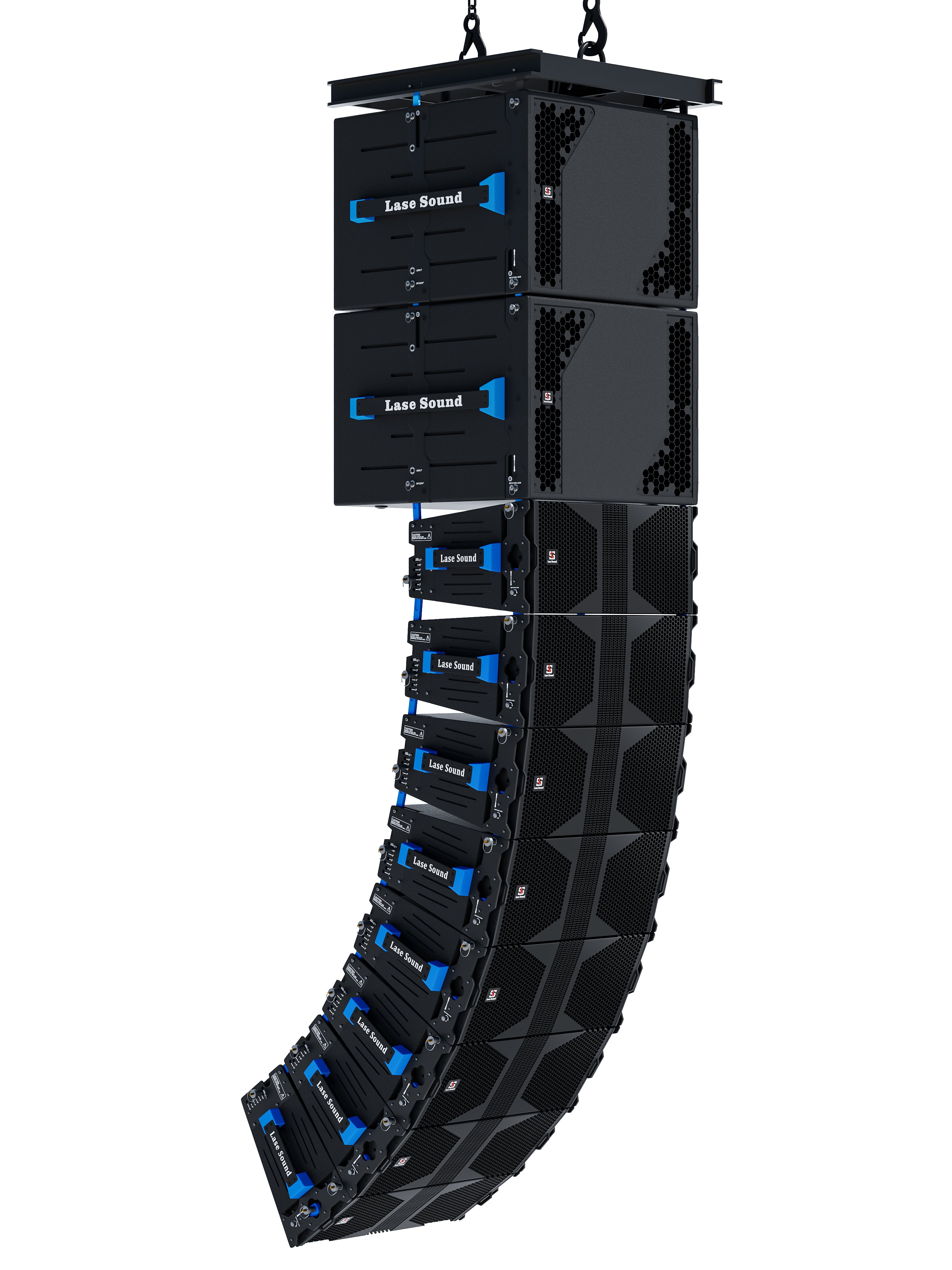
Cabinets are designed using advanced acoustic models and wavefront synthesis technology to achieve even coverage, precise directivity, and high clarity over long distances.
Large, high-sensitivity drivers and robust enclosures allow for high SPL output, meeting the demands of stadiums, convention centers, and concert halls.
These speakers serve as core components of complete sound systems, with performance dependent on accurate integration with external crossovers, amplifiers, and digital signal processors.
In permanent venues such as theaters, sports arenas, and houses of worship, passive line array speakers provide:
Centralized control: Amplifiers and processors can be placed in equipment rooms for easier monitoring, maintenance, and cooling.
System longevity: Independent amplification allows for technology updates without replacing costly speaker arrays.
Architectural integration: Flexible rigging and line array geometry can be tailored to venue acoustics, optimizing audience coverage and minimizing reflections.
For touring production companies, passive line arrays offer:
High reuse efficiency: A single amplifier rack can drive multiple arrays for different stage configurations, reducing the need for redundant equipment.
Rapid maintenance: Modular design ensures that a single cabinet or channel failure can be addressed immediately, minimizing show interruptions.
Reduced logistics burden: Lighter cabinets facilitate transportation and setup, while operational familiarity with passive systems streamlines crew training and deployment.
Both scenarios illustrate how passive line array speakers deliver measurable benefits in reliability, operational flexibility, and long-term investment protection, making them a preferred choice for demanding professional environments.
While powered line arrays offer plug-and-play convenience, passive line array speakers remain an indispensable technology in professional audio for both fixed installations and touring applications. Their engineering rationality, operational reliability, and economic sustainability make them ideal for venues and productions that demand high-quality, flexible, and long-lasting solutions.
For system integrators, rental companies, and OEM partners, passive systems provide:
Customizability: Tailoring array geometry, driver selection, and integration with external amplification.
Operational confidence: Reliable performance under continuous high SPL usage.
Long-term value: Independent upgrade paths for amplification and processing without replacing the array.
Guangzhou LASE SOUND Co., Ltd. leverages OEM partnerships to deliver passive line array speakers optimized for client-specific branding, acoustic design, and performance requirements. These speakers offer an unparalleled foundation for critical installations and touring productions, supporting professional audio companies in achieving both technical excellence and operational efficiency.
Investing in passive line array speakers is a strategic decision: it secures system flexibility, protects long-term value, and ensures that sound professionals can deliver exceptional audio experiences consistently, no matter the venue or tour demands.


 EN
EN

 Hot News