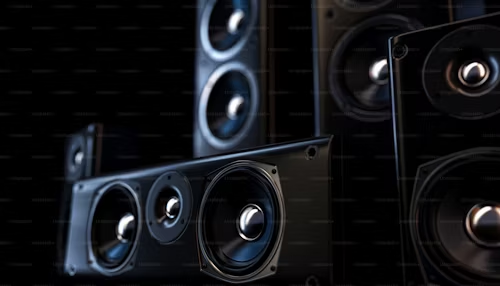
A 12 inch subwoofer occupies a unique and highly practical niche in professional audio: compact enough for flexible deployment, yet capable—when properly designed and configured—of delivering powerful, musical low-frequency performance. At Lase Sound we’ve refined our 12 inch subwoofer designs to balance deep LF extension, punchy transient response, and high continuous power handling so the driver can perform reliably in both fixed-install venues and touring live events.
The appeal of a 12 inch subwoofer lies in its versatility. Compared with larger 15- or 18-inch alternatives, a well-engineered 12 inch subwoofer offers faster transient attack, smaller enclosure footprints, and easier rigging or placement. Advances in magnet motor design, long-stroke coil architectures, and thermal management enable modern 12 inch subwoofer units to move large volumes of air relative to their size, yielding SPL and low-end impact disproportionate to enclosure volume.
For fixed installations—clubs, smaller theaters, houses of worship, and premium retail spaces—the 12 inch subwoofer provides an elegant compromise between acoustic performance and installation constraints. For live events, portable rigs built around multiple 12 inch subwoofer enclosures can achieve linear low-end extension down to approximately 35 Hz while remaining road-friendly. In this article we analyze product characteristics of a modern 12 inch subwoofer, dig into detailed performance metrics, and offer configuration guidance and an application case to show how to specify and deploy a 12 inch subwoofer system for demanding commercial and live scenarios.
The defining features of a professional 12 inch subwoofer include optimized low-frequency extension and punch, long-travel (long-stroke) driver geometry, and robust RMS power handling. Each of these aspects must be engineered in concert to deliver controlled, reliable low end.
Optimized low-frequency extension and punch. A 12 inch subwoofer tuned for deep extension typically combines a high-excursion cone and a carefully selected enclosure (ported, bandpass, or horn) to achieve low-frequency output approaching 30–40 Hz. Lase Sound’s 12 inch subwoofer models use aerodynamic cone profiles and stiff suspensions to resist nonlinear behavior at high excursion, preserving transient punch and clarity. This optimized tuning avoids the slow, boomy response often associated with undersized low-end systems, allowing a 12 inch subwoofer to articulate bass lines with rhythmic accuracy.
Long-stroke, high-efficiency motor design. To move more air within a compact footprint, the modern 12 inch subwoofer uses a large magnet motor and extended voice-coil travel. The long-stroke design increases displacement (Xmax) while maintaining linear motor control (high BL). Higher BL and controlled Xmax result in greater acoustic output per applied watt, making the 12 inch subwoofer relatively efficient for its size. This design reduces amplifier strain and extends reliability during prolonged high-level use.
High RMS power handling and thermal management. Professional live applications demand continuous power resilience. Typical high-end 12 inch subwoofer units are rated in the 500–1500 W RMS class, supported by thermal vents, vented pole pieces, and advanced voice-coil cooling techniques. The result is a 12 inch subwoofer that can sustain program material without thermal compression or mechanical failure.
Practical deployment features. Robust enclosure construction, fly points for flown subs, weatherized variants, and integration with DSP presets are essential. A modern 12 inch subwoofer should include onboard protection, recommended limiter settings, and manufacturer EQ presets for different box orientations and array configurations. Lase Sound equips its 12 inch subwoofer models with DSP-ready profiles to simplify crossover, phase alignment, and limiting in both fixed installations and touring systems.
When evaluating a 12 inch subwoofer for demanding installations, several detailed performance metrics and behaviors deserve attention: frequency extension, sensitivity, maximum SPL, linear excursion behavior, thermal stability, and array scalability.
Frequency extension and enclosure impact. The low-end capability of a 12 inch subwoofer is heavily dependent on enclosure architecture. In a compact sealed box, a 12 inch subwoofer will exhibit tight transient response but limited extension—often around 40–60 Hz useful bandwidth. A vented/ported 12 inch subwoofer can extend down to approximately 30–35 Hz with improved output, while horn-loaded 12 inch subwoofer designs push efficiency and throw for longer distances. For fixed installs where room coupling can be exploited, a handful of ported 12 inch subwoofer units, correctly placed, achieve remarkable perceived LF depth. For touring, combining ported 12 inch subwoofer cabinets with DSP tuning delivers repeatable low-frequency response across venues.
Sensitivity and amplifier matching. A well-designed 12 inch subwoofer will exhibit sensitivity figures that make it efficient to drive—typical sensitivity might be in the range of 95–100 dB SPL @1W/1m in optimized horn designs, lower in sealed designs. High sensitivity reduces the number of amplifiers required and provides greater headroom. Amplifier selection should consider the 12 inch subwoofer’s impedance, power rating, and program factor; conservative amplifier headroom (2–4× continuous RMS rating) preserves dynamics and protects the subwoofer from clipping-related damage.
Maximum SPL and linear excursion. The long-stroke 12 inch subwoofer can achieve high peak SPLs when stacked or arrayed. A single high-quality 12 inch subwoofer module, in a properly tuned enclosure and driven with adequate power, can produce peak levels in the 120–130 dB range at close listening distances—scalable by arraying multiple units. The key is linear excursion (Xmax) and low distortion at high displacement: Lase Sound’s 12 inch subwoofer implementations prioritize linear motor topology to keep THD low under heavy program material, preserving punch and clarity.
Thermal and mechanical durability. Long shows and sustained low-frequency content stress both voice coil temperature and excursion mechanics. Cooling strategies—vented pole pieces, airflow-optimized voice coils, and enhanced surround materials—are critical for a 12 inch subwoofer to maintain performance without thermal compression. Continuous-power ratings (RMS) in the 500–1500 W range must be paired with conservative operating practices and DSP-based limiting to ensure longevity.
Array behavior and directional control. Multiple 12 inch subwoofer cabinets allow designers to shape coverage. Cardioid and end-fire configurations using 12 inch subwoofer modules can reduce rearward radiation and control stage bleed—advantageous for outdoor festivals and theatrical stages. Distributed arrays of smaller 12 inch subwoofer units help smooth room modes in fixed installations, producing a more even LF field than a single large cabinet.
DSP integration and correction. A 12 inch subwoofer benefits substantially from DSP for filter choice, phase alignment, limiter control, and room-compensation EQ. Using measured impulse and frequency response, engineers can apply linear-phase crossover slopes, minimal group delay, and transient-preserving EQ to maximize the 12 inch subwoofer’s perception of low-end while avoiding overload.
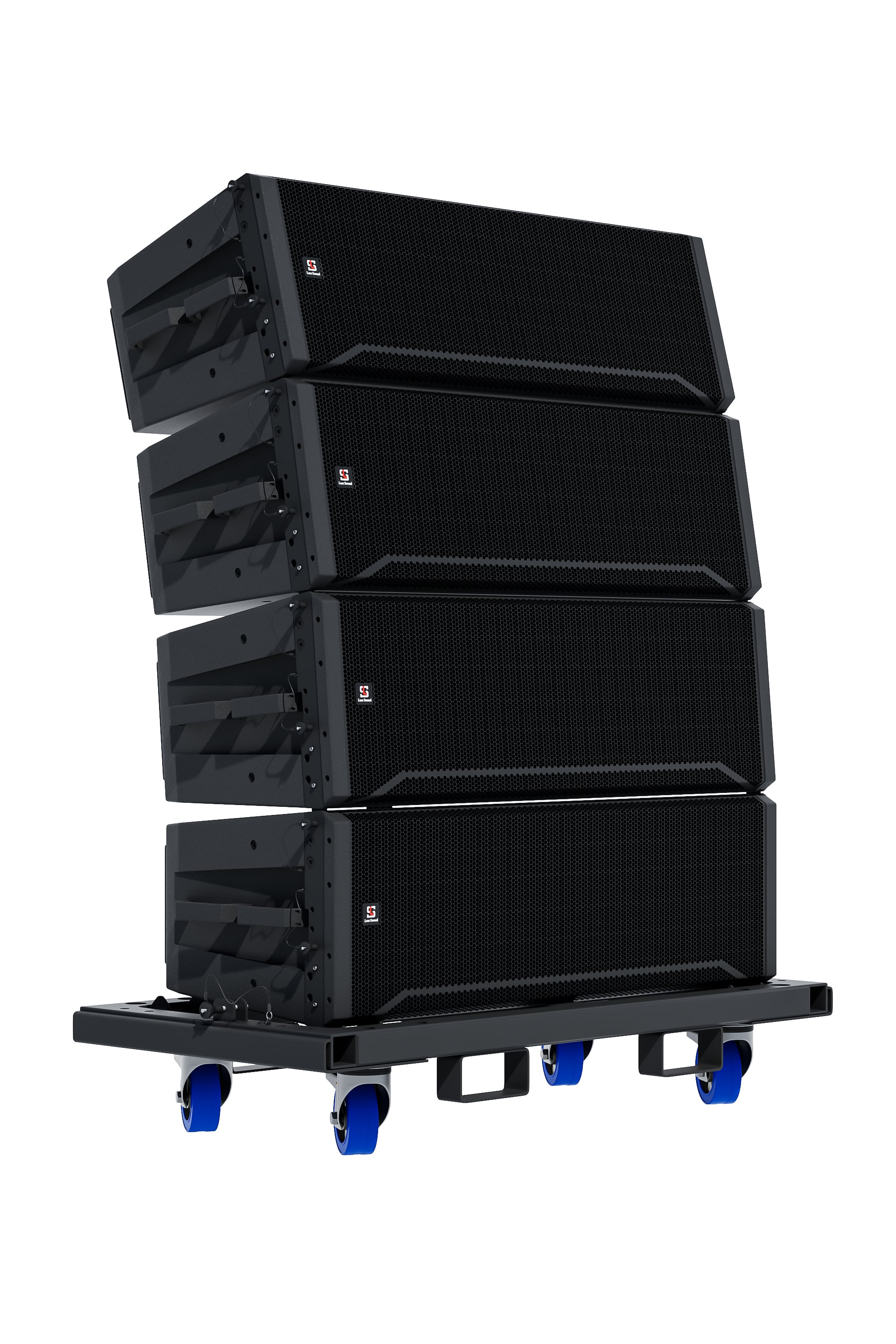
Consider a mid-sized live music venue (capacity 1,500) that requires tight, punchy bass for rhythm-driven acts while also supporting spoken word and DJ sets. The production brief calls for deep LF extension to 35 Hz, fast transient response, and modest backstage footprint. A solution built around a cluster of six Lase Sound 12 inch subwoofer cabinets (three per side) in dual-ported enclosures provides an ideal balance.
Configuration and reasoning. Each 12 inch subwoofer is driven by a dedicated amplifier channel with DSP crossover set at 80 Hz (slope: 24 dB/octave) to the mains, and low-latency limiters guarding excursion and thermal load. The 12 inch subwoofer choice allows the system designer to keep the stage front compact, avoiding oversized stacks that impede sightlines. Cardioid tuning across the array reduces rear radiation, minimizing stage wash and improving monitor clarity.
Performance outcome. In practice, the 12 inch subwoofer array delivered tight, articulate low end with clear rhythmic definition for live bands and DJ bass lines. The audience experienced substantial LF presence down to about 35 Hz without the muddiness sometimes associated with larger-driver systems. The high power handling and efficient motor design of each 12 inch subwoofer maintained headroom throughout the show, and the DSP presets simplified changeovers between different program material.
Operational advantages. The 12 inch subwoofer modules were easier to rig, transport, and conceal than larger alternatives, reducing load-in time and labor costs. Weather-resistant variants ensured reliability during outdoor events. Overall, the 12 inch subwoofer-based approach provided a practical and sonically satisfying solution for a versatile live venue.
A modern 12 inch subwoofer—when engineered with optimized LF tuning, long-stroke mechanics, and substantial RMS capacity—provides a compelling combination of punch, extension, and practicality for both fixed installations and live events. Proper enclosure selection, amplifier matching, DSP tuning, and array strategy unlock a 12 inch subwoofer’s potential to produce musical, powerful low frequencies that rival larger systems in many contexts. Lase Sound’s product lineup and configuration best practices emphasize predictable performance, serviceability, and integration tools so audio professionals can confidently specify 12 inch subwoofer systems that meet demanding program and venue requirements.


 EN
EN

 Hot News