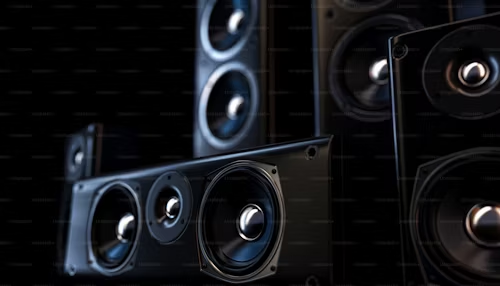
In commercial environments, sound is not a decorative feature—it is a functional layer of the customer experience. As an acoustic solutions consultant working with restaurants, hotels, retail brands, and corporate facilities, I frequently encounter the same operational symptoms: announcements that customers cannot clearly understand, background music that feels harsh or fatiguing, and meeting spaces where speech intelligibility deteriorates as occupancy increases. These issues rarely trigger immediate complaints, yet they silently reduce dwell time, perceived service quality, and brand credibility.
Decision makers often approach loudspeaker selection with a narrow focus on maximum output and initial purchase price. However, best sound quality speakers in commercial environments are not defined by how loud they can play, but by how clearly they communicate information, how comfortably they shape atmosphere, and how consistently they perform over years of daily operation. Selecting the wrong solution introduces acoustic friction into the business itself.
Market studies in hospitality and retail environments indicate that ambient comfort—including acoustics—directly influences customer satisfaction scores and repeat visitation. Speech clarity in public spaces also correlates with safety compliance and operational efficiency. These realities make the selection of best sound quality speakers a strategic business decision rather than a purely technical one.
At Guangzhou LASE SOUND Co., Ltd., our role extends beyond manufacturing. We collaborate with integrators and end users to translate acoustic performance into measurable commercial outcomes, ensuring that best sound quality speakers deliver consistent value throughout their lifecycle.
The term best sound quality speakers must be anchored in measurable engineering principles and operational reliability rather than subjective impressions.
In commercial deployment, “best” does not mean isolated laboratory excellence. It means repeatable acoustic behavior across production batches and stable tonal integrity after prolonged operation. Large venues often deploy dozens or hundreds of loudspeakers within a single facility. Even minor unit-to-unit deviations accumulate into uneven coverage, localization errors, and listener fatigue.
High manufacturing tolerances, disciplined quality control, and controlled component sourcing reduce acoustic variance. Long-term stability further depends on thermal management, mechanical fatigue resistance, and enclosure rigidity. Without these controls, best sound quality speakers gradually drift in tonal balance, undermining the original system tuning.
International acoustic research confirms that small deviations in frequency response consistency significantly impact perceived uniformity in distributed sound systems. This reinforces why commercial buyers must evaluate manufacturing discipline alongside headline specifications when sourcing best sound quality speakers.
Sound quality in commercial spaces is primarily defined by intelligibility, tonal neutrality, and low distortion under typical operating levels. Flat and extended frequency response ensures that music remains natural and that speech articulation remains intact. Low harmonic distortion prevents harshness and listening fatigue, especially in mid-frequency ranges critical for speech intelligibility.
Transient response determines how accurately the loudspeaker reproduces attack and decay characteristics of instruments and consonants. Sluggish transient behavior smears articulation and reduces clarity even at moderate volume. Achieving these characteristics requires well-engineered transducers, optimized crossover networks, vibration-controlled enclosures, and predictable dispersion behavior.
Independent acoustical standards bodies consistently highlight the importance of smooth mid-band response and controlled distortion thresholds in public address intelligibility metrics. For integrators selecting best sound quality speakers, these parameters provide objective benchmarks for performance validation.
Even the most refined loudspeaker cannot deliver best sound quality speakers performance if poorly matched to the acoustic environment. Commercial spaces vary widely in ceiling height, surface reflectivity, background noise levels, and zoning requirements. Effective loudspeaker design must offer flexible mounting options, controlled directivity, scalable impedance configurations, and environmental protection when required.
Directional control reduces reflections that degrade intelligibility in reverberant environments. Mechanical adaptability simplifies integration with architectural constraints. Electrical compatibility ensures predictable amplifier loading across distributed systems. These system-level considerations convert raw acoustic capability into practical performance outcomes.
At Guangzhou LASE SOUND Co., Ltd., system integration support accompanies product delivery, enabling customers to deploy best sound quality speakers as part of a cohesive acoustic solution rather than isolated components.
A disciplined evaluation framework protects buyers from superficial specification comparisons when sourcing best sound quality speakers.
First, clarify application-specific sound priorities. Corporate boardrooms prioritize speech articulation and low fatigue. Hospitality spaces emphasize tonal warmth and ambient consistency. Fitness and entertainment zones require higher output stability with minimal distortion. Understanding these priorities ensures that best sound quality speakers align with operational objectives rather than generic performance metrics.
Second, request and interpret meaningful data. Frequency response curves, distortion measurements at realistic power levels, and dispersion plots reveal true acoustic behavior. Particular attention should be paid to mid-frequency smoothness and off-axis consistency, both critical for uniform coverage.
Third, assess mechanical and environmental suitability. Enclosure rigidity, resonance damping, mounting hardware integrity, and ingress protection ratings directly affect long-term sound integrity. Resonant enclosures introduce coloration that degrades best sound quality speakers performance regardless of transducer quality.
Fourth, conduct contextual listening evaluations whenever feasible. Demonstrations in acoustically similar environments reveal how speakers interact with reflective surfaces, background noise, and listener density. Listening fatigue and clarity consistency across seating areas provide practical validation beyond datasheets.
In commercial environments, best sound quality speakers function as invisible service staff and atmosphere architects. They shape customer perception, reinforce brand identity, and enable operational clarity without drawing attention to themselves. Investments in acoustic integrity yield measurable returns through improved customer satisfaction, staff efficiency, and reduced maintenance interventions.
At Guangzhou LASE SOUND Co., Ltd., our engineering philosophy integrates acoustic precision, production consistency, and system adaptability to deliver scalable best sound quality speakers solutions for global commercial projects. Our consulting-driven engagement model ensures that product selection supports long-term business performance rather than short-term procurement metrics.
If your current project faces challenges related to reverberation control, zoning complexity, or sound consistency, our acoustic consulting team welcomes the opportunity to evaluate your space parameters and operational goals. A structured system recommendation can demonstrate how properly selected best sound quality speakers transform acoustic performance into tangible business value.
International Electrotechnical Commission (IEC): Electroacoustic Performance Standards for Public Address Systems.
Audio Engineering Society (AES): Research on Loudspeaker Distortion, Directivity Control, and Speech Intelligibility Metrics.
Peer-reviewed Hospitality Acoustics Studies on Ambient Sound Impact on Customer Experience and Dwell Time.


 EN
EN


 Hot News