Studio monitors use 15-40 watts when active, but they still suck down 8-12 watts at idle—equivalent to leaving a small 75W incandescent bulb on at 13% brightness (Audio Engineering Society, nito). Unlike typical backup power, the standby power ensures a charged capacitor (for instantaneous wak-up) and cools down digital signal processors (DSPs) that prevent them from being damaged by thermal cycling circumstances. These newer designs realize <1.5W of idle power usage in "deep sleep" mode through using secondary low-power circuits while maintaining crucial calibration data.
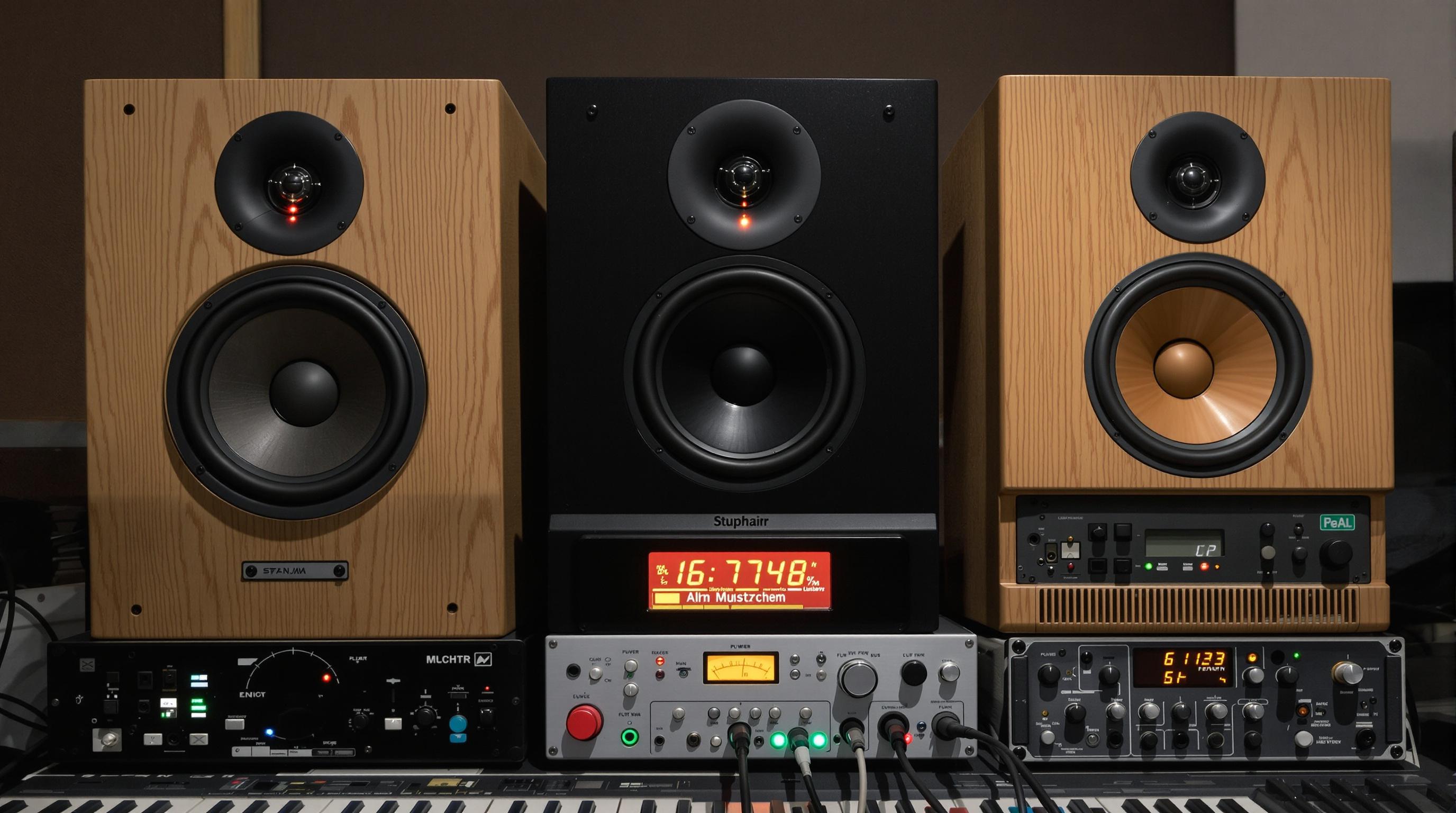
| Monitor Type | Active Power (W) | Idle Power (W) | Annual Idle Cost* |
|---|---|---|---|
| 8" Nearfield | 38 | 9.2 | $15.12 |
| 5" Multimedia | 21 | 5.7 | $9.36 |
| 3-Way Main Monitor | 127 | 18.4 | $30.24 |
*Calculated at $0.15/kWh operating 24/7. Data reflects 2023 IEC 62301 measurements.
A professional studio with 12 monitors left perennially on will burn $2,600+ annuallyâenough to power three households (ENERGY STAR, 2024). This is equal to 34% of the total studios electricity costs where no smart power management is implemented. If all audio engineers used optimized sleep modes, it could save the industry 740 megawatt-hours of energy annuallyâthe equivalent to removing 530 cars from the road for a year.
Class-D amplifiers achieve over 90% efficiency via Pulse-Width Modulation (PWM), compared to 50-65% in Class-AB designs, reducing wasted heat by 40%. Early models struggled with:
Modern implementations now match Class-AB benchmarks, with total harmonic distortion (THD) below 0.005% through advanced filtering and feedback algorithms.
| Metric | Class-D | Class-AB |
|---|---|---|
| Efficiency | 90-95% | 50-65% |
| Idle Power | 12-25W | 30-60W |
| Frequency Range | 20Hz-45kHz (±1dB) | 20Hz-30kHz (±1dB) |
| THD @ 1kHz | 0.003-0.02% | 0.001-0.05% |
Three innovations preserve audio fidelity:
These reduce group delay to <15μs, critical for transient-heavy material like percussion.
An 8" nearfield monitor redesign achieved:
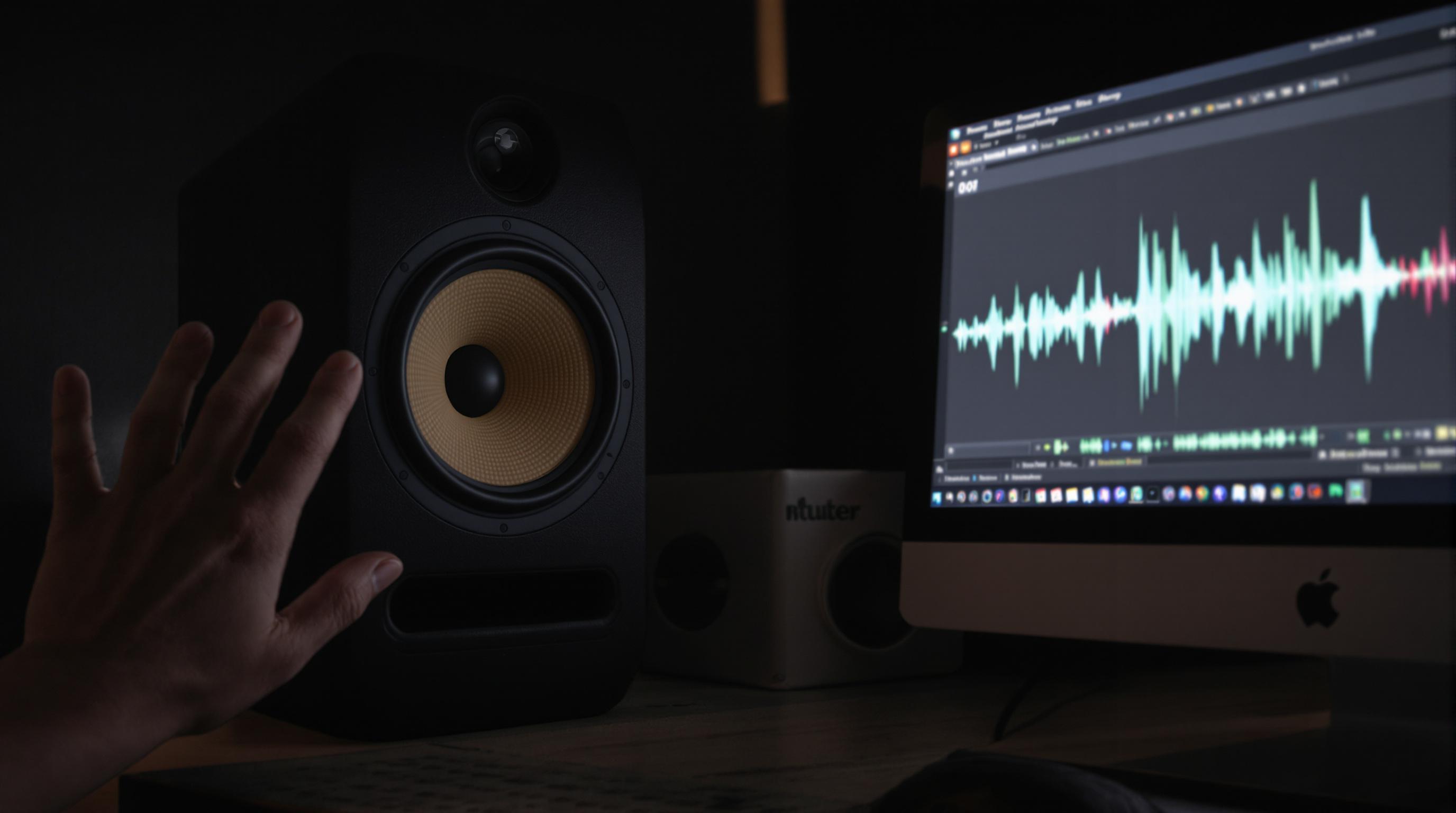
Modern monitors activate auto-suspend after 15â30 minutes idle, reducing standby power by 85%. Wake-on-signal via 0.5W DSP chips prevents workflow interruptions, achieving 95% energy savings without boot delays (AES, 2023).
Combining infrared sensors with audio analysis cuts daily energy use by 70%. Facilities report $320/year savings per workstation with presence-detection monitors (IEEE, 2024).
Pre-charged capacitors and buffered pathways enable <10ms wake-up with ±0.15dB frequency consistency. Burn-in testing ensures reliability across 10,000+ power cycles.
MEMS sensors and DSP algorithms maintain ±0.25dB accuracy while consuming 87% less power than manual recalibration (2024 Audio Engineering Study).
Solutions include:
Modern designs reduce DC offset drift by 62% via temperature-stabilized voltage references.
Blind tests at Berklee (2024) showed 89% of engineers couldn't distinguish auto-calibrated from manually tuned monitors, despite forum debates about potential tradeoffs.
Bass buildup from poor placement forces 22% higher amplifier workload. The "38% rule" (monitors at 38% room length) reduces low-frequency anomalies, lowering average load from 72W to 57W (MDPI, 2023).
Proper treatment cuts corrective amplification by 35-40%:
Modified kenaf fiber panels outperform traditional materials by 29% in low-frequency control, allowing 14% less amplifier headroom.
Studio monitors consume 8-12 watts when in idle mode, which is like having a small 75W incandescent bulb on at 13% brightness.
Smart power management can lead to significant energy savings. For instance, a professional studio with 12 monitors on idle can save over $2,600 annually when using optimized sleep modes, reducing power consumption and electricity costs.
Class-D amplifiers achieve over 90% efficiency and have lower wasted heat compared to Class-AB designs. Modern implementations have minimal sonic tradeoffs and match Class-AB benchmarks.


 EN
EN

 Hot News