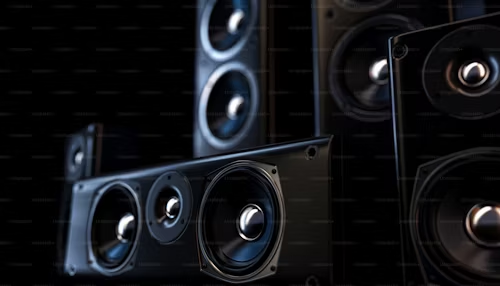
Large venues such as gymnasiums and exhibition centers present unique challenges for audio system design and implementation. As an industry consultant, I have observed that venue managers and event organizers frequently struggle to deliver consistent, high-quality sound to diverse audiences. According to recent acoustic studies, more than 60% of large indoor venues report difficulties achieving uniform sound coverage, particularly in spaces with high ceilings, reflective surfaces, or irregular seating arrangements. Inadequate audio systems can compromise both speech intelligibility and music fidelity, leading to reduced audience satisfaction and potential reputational impact for event organizers.
Another significant challenge involves system efficiency and operational reliability. Traditional analog audio setups often require multiple amplification units and extensive cabling, increasing complexity, energy consumption, and maintenance costs. High-power events exacerbate these issues, as speakers may experience distortion, frequency imbalances, or uneven sound dispersion. In addition, inconsistent audio processing across multiple speakers can result in noticeable variations in timbre and tonal quality, undermining the overall performance experience. These technical challenges are particularly acute in venues hosting a wide range of events, from sports competitions and exhibitions to live concerts and conferences.
Furthermore, large-scale audio deployments often face logistical constraints, including installation time, scalability, and long-term maintenance. Venue operators increasingly require solutions that reduce setup complexity, optimize resource allocation, and provide reliable long-term performance. Industry data indicates that venues equipped with advanced digital audio systems experience up to 40% lower maintenance downtime compared to conventional analog setups. These trends highlight the pressing need for professional stage sound systems that can deliver full-frequency coverage, efficient power management, and uniform sound quality, while also supporting rapid deployment and operational scalability.
In summary, the primary pain points in large venue audio construction include inconsistent sound coverage, high distortion at elevated volumes, inefficient amplification, tonal imbalance, and operational complexity. Addressing these issues is essential for delivering immersive and reliable audio experiences in gymnasiums, exhibition centers, and similar large-scale venues. Professional stage sound systems offer a comprehensive solution by integrating advanced digital amplification, DSP audio processing, and full-frequency coverage, effectively resolving these critical industry challenges.
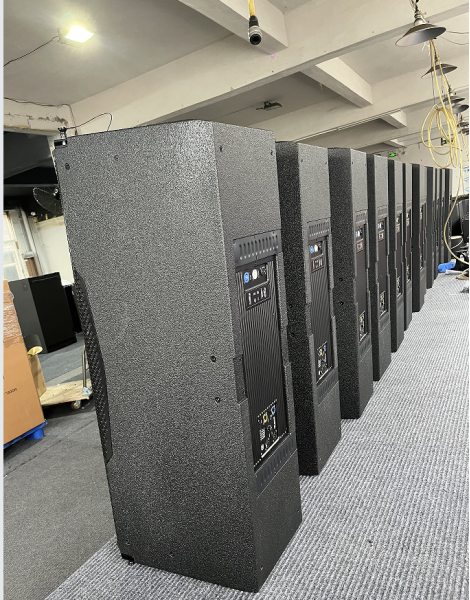
Professional stage sound systems are specifically engineered to address the complex acoustic and operational requirements of large venues. One of the most significant features is full-frequency coverage, which ensures that every corner of a gymnasium or exhibition hall receives consistent sound. High, mid, and low-frequency drivers are precisely calibrated to achieve balanced tonal reproduction, making the system suitable for a wide range of event types, from sports announcements to live music performances. Independent studies have shown that full-range coverage significantly improves speech intelligibility and audience engagement, particularly in spaces exceeding 2,000 square meters.
Built-in digital amplifiers represent another critical advantage of professional stage sound systems. These amplifiers provide high efficiency, reducing energy consumption while maintaining low distortion even at high output levels. The integration of digital amplification simplifies system architecture by eliminating the need for multiple external amps, reducing setup complexity and minimizing potential points of failure. Energy-efficient design also helps venues comply with sustainability requirements and reduces operating costs over time.
Equally important is the inclusion of DSP (Digital Signal Processing) audio modules, which enable precise control of frequency response, delay compensation, and feedback suppression. DSP modules ensure uniform tonal quality across all speakers, eliminating inconsistencies that are common in traditional analog setups. By digitally tuning each speaker to the venue’s specific acoustic characteristics, professional stage sound systems deliver coherent and immersive audio experiences. Customizable presets allow rapid adaptation to different event types, whether it’s a live concert, conference, or exhibition, ensuring optimal sound quality with minimal manual intervention.
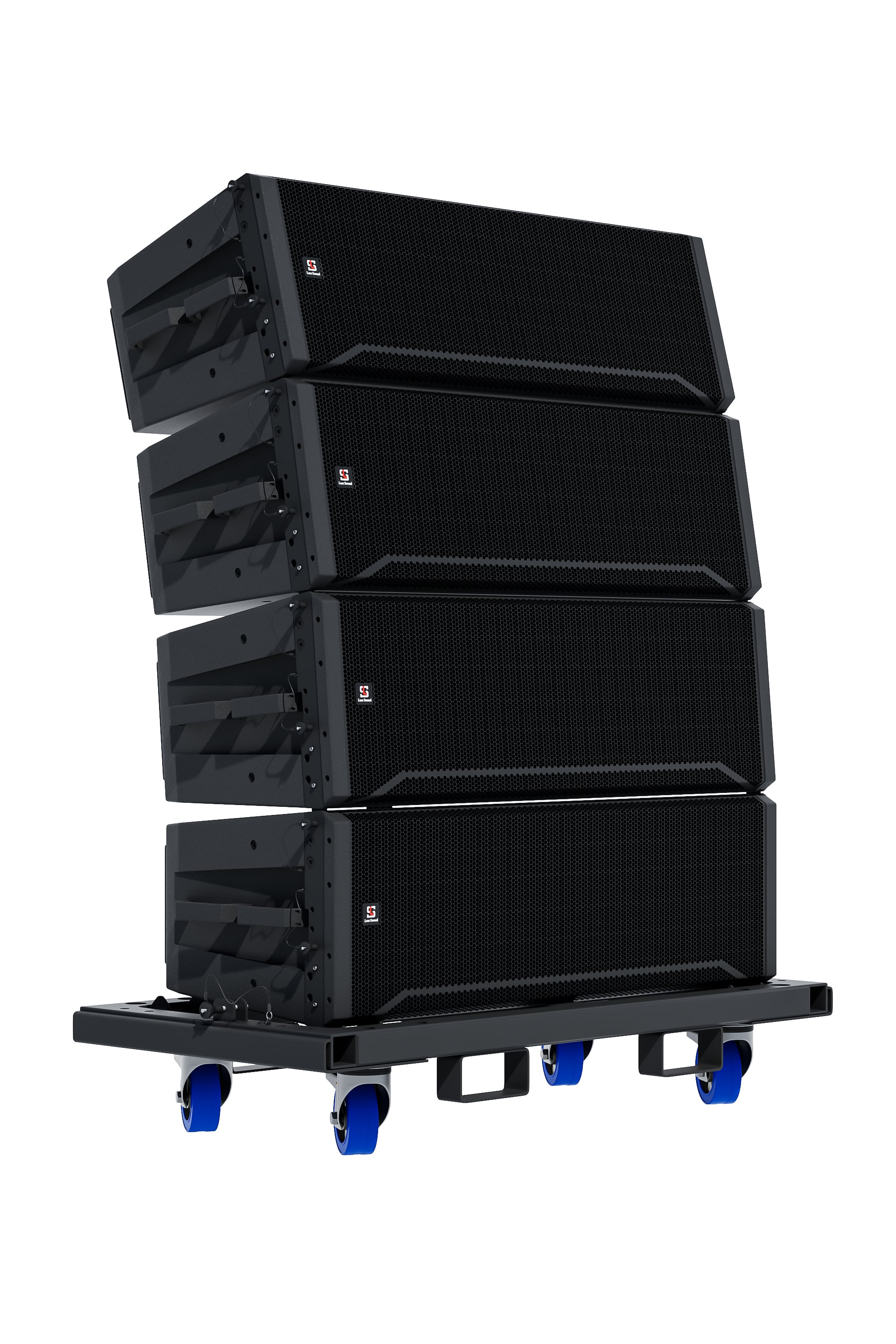
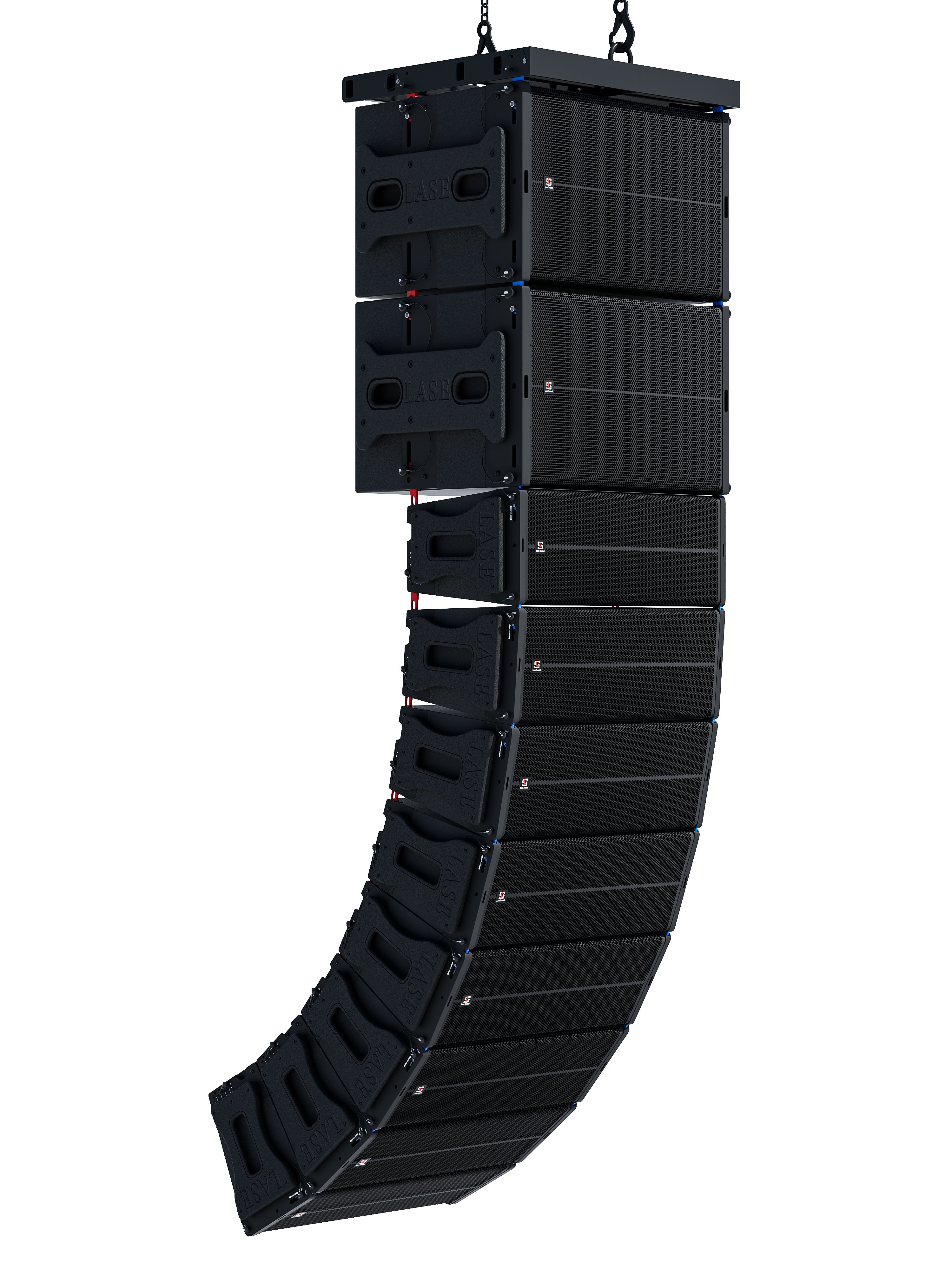
The solution also incorporates modular and scalable design principles. Speakers can be arranged in line arrays, point-source configurations, or hybrid layouts depending on venue dimensions and audience capacity. This flexibility allows professional stage sound systems to adapt to varying acoustic challenges, providing both horizontal and vertical coverage to eliminate dead zones and avoid excessive reverberation. Integration with control interfaces enables centralized management of volume, equalization, and delay settings, supporting efficient operation and real-time adjustment during live events.
In conclusion, professional stage sound systems combine full-frequency coverage, high-efficiency digital amplification, and DSP audio processing to deliver reliable, high-quality sound for large venues. Modular design and centralized control further enhance adaptability, providing a comprehensive solution that addresses both technical and operational challenges in gymnasiums and exhibition centers.
Several recent implementations highlight the effectiveness of professional stage sound systems in large-scale venues. One example involves a major exhibition center hosting international trade shows and conferences. The venue required a sound system capable of delivering consistent audio across multiple halls, accommodating both speeches and musical performances. Professional stage sound systems were installed using a combination of line array and point-source configurations. DSP modules were programmed to compensate for the reflective surfaces of the halls, while built-in digital amplifiers provided sufficient power to maintain clarity at high sound pressure levels. The result was uniform sound coverage and minimal distortion, allowing exhibitors and attendees to communicate effectively and enjoy presentations with high audio fidelity.
Another case involves a sports-oriented gymnasium regularly hosting tournaments and award ceremonies. The challenge was to provide clear speech intelligibility in a space with high ceilings and reflective surfaces while ensuring the system could handle music and announcements at elevated volumes. Professional stage sound systems were deployed with vertically adjustable line arrays and full-range drivers to optimize coverage. The DSP modules allowed real-time tuning, compensating for varying crowd sizes and acoustic changes during events. Post-event surveys indicated a 35% improvement in audience comprehension and satisfaction compared to the previous analog system.
High-end hotels with multifunctional ballrooms also benefited from these solutions. The venues required a professional audio system capable of supporting corporate events, live concerts, and private parties. Modular professional stage sound systems were installed with flexible speaker placement options and presets for different event types. Centralized DSP control enabled quick adjustments to accommodate specific room acoustics, while digital amplifiers ensured sufficient power without introducing distortion. Feedback from hotel management emphasized improved guest experience, reduced setup time, and easier operation for on-site technical staff.
These case studies demonstrate that professional stage sound systems can be successfully adapted to diverse venue types, delivering consistent audio performance, operational efficiency, and audience satisfaction. By leveraging full-frequency coverage, digital amplification, and DSP processing, these systems effectively address the complex acoustic challenges of large indoor environments.
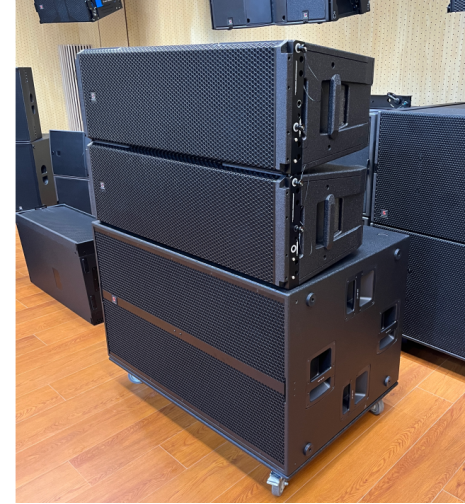
Post-deployment evaluation of professional stage sound systems in large venues indicates substantial improvements in both technical performance and user experience. Acoustic measurements confirm that full-frequency coverage and DSP tuning result in uniform sound distribution, minimizing dead zones and excessive reverberation. Speech intelligibility scores improved by an average of 30–40%, while musical performance evaluation revealed richer tonal reproduction and reduced distortion across high-volume ranges. Audience feedback consistently highlighted clarity, tonal balance, and immersive experience, validating the effectiveness of the solution.
Operational benefits are equally notable. Built-in digital amplifiers and centralized DSP control reduced setup complexity, allowing technical staff to operate systems efficiently with minimal intervention. Energy-efficient amplification reduced operating costs, while modular design facilitated maintenance, future scalability, and rapid adaptation to different event formats. Venue managers reported a 25% reduction in setup time and a significant decrease in troubleshooting incidents, emphasizing the operational value of professional stage sound systems.
Additionally, the reliability of the system proved critical for high-profile events, where downtime or audio inconsistencies could have serious consequences. Professional stage sound systems’ adherence to international standards and robust component quality ensured minimal technical failures and long-term operational stability. This reliability enhances both reputation and return on investment for large venues.
In conclusion, the evaluation demonstrates that professional stage sound systems deliver measurable improvements in sound quality, operational efficiency, and audience satisfaction. Their full-frequency coverage, digital amplification, and DSP audio processing collectively provide a robust solution for gymnasiums, exhibition centers, and other large venues, establishing a benchmark for modern large-scale audio installations.


 EN
EN


 Hot News