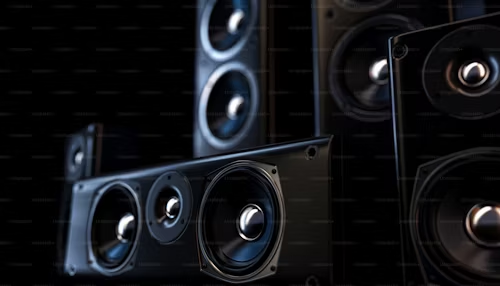
Designing PA speaker systems for large venues is fundamentally different from configuring sound reinforcement for small halls or temporary event spaces. Stadiums, arenas, large theatres, and exhibition centers present complex acoustic environments characterized by long reverberation times, expansive coverage areas, reflective architectural surfaces, and highly variable audience absorption.
In such spaces, the core engineering challenge remains consistent: how to deliver uniform sound pressure level, balanced frequency response, and high speech intelligibility to every seat—without overwhelming the room with uncontrolled energy.
The answer does not lie in simply increasing amplifier power or adding more loudspeakers. Advanced PA speaker systems are the result of disciplined acoustic engineering, precise directivity control, intelligent signal processing, and predictive system modeling.
As a professional audio manufacturer with over a decade of experience serving global B2B clients, Guangzhou LASE SOUND Co., Ltd. supports stadium integrators, theatre technical managers, and large-scale rental companies with engineered PA solutions tailored for demanding environments. We are not merely equipment suppliers; we function as technical partners, helping clients translate acoustic theory into reliable, high-performance installations.
This article examines the engineering principles behind advanced PA speaker systems and how proper system design ensures maximum coverage and clarity in large venues.
Large venues introduce a series of predictable acoustic complications. Reverberation times often exceed optimal speech clarity thresholds. Reflections from ceilings, walls, and concourses create comb filtering and temporal smearing. Distance attenuation challenges consistency between front and rear seating zones.
According to widely referenced room acoustics standards, speech intelligibility begins to degrade rapidly when early reflections exceed controlled direct sound energy. In stadium-scale spaces, this imbalance can easily occur without careful directivity management.
Therefore, the objective of advanced PA speaker systems is not simply to produce high SPL. The objective is controlled energy distribution—direct sound must dominate the listening experience while minimizing unintended excitation of reflective surfaces.
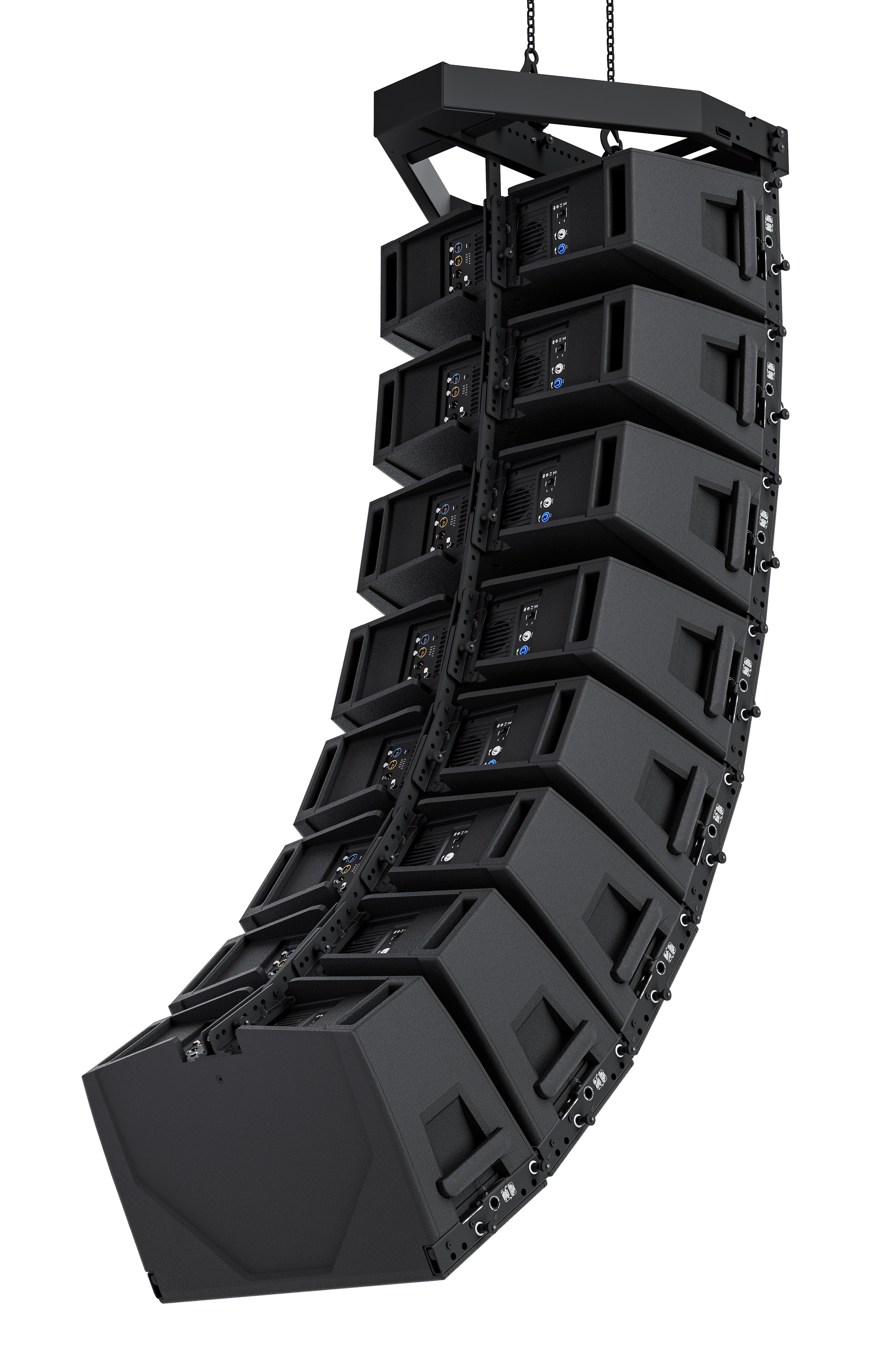
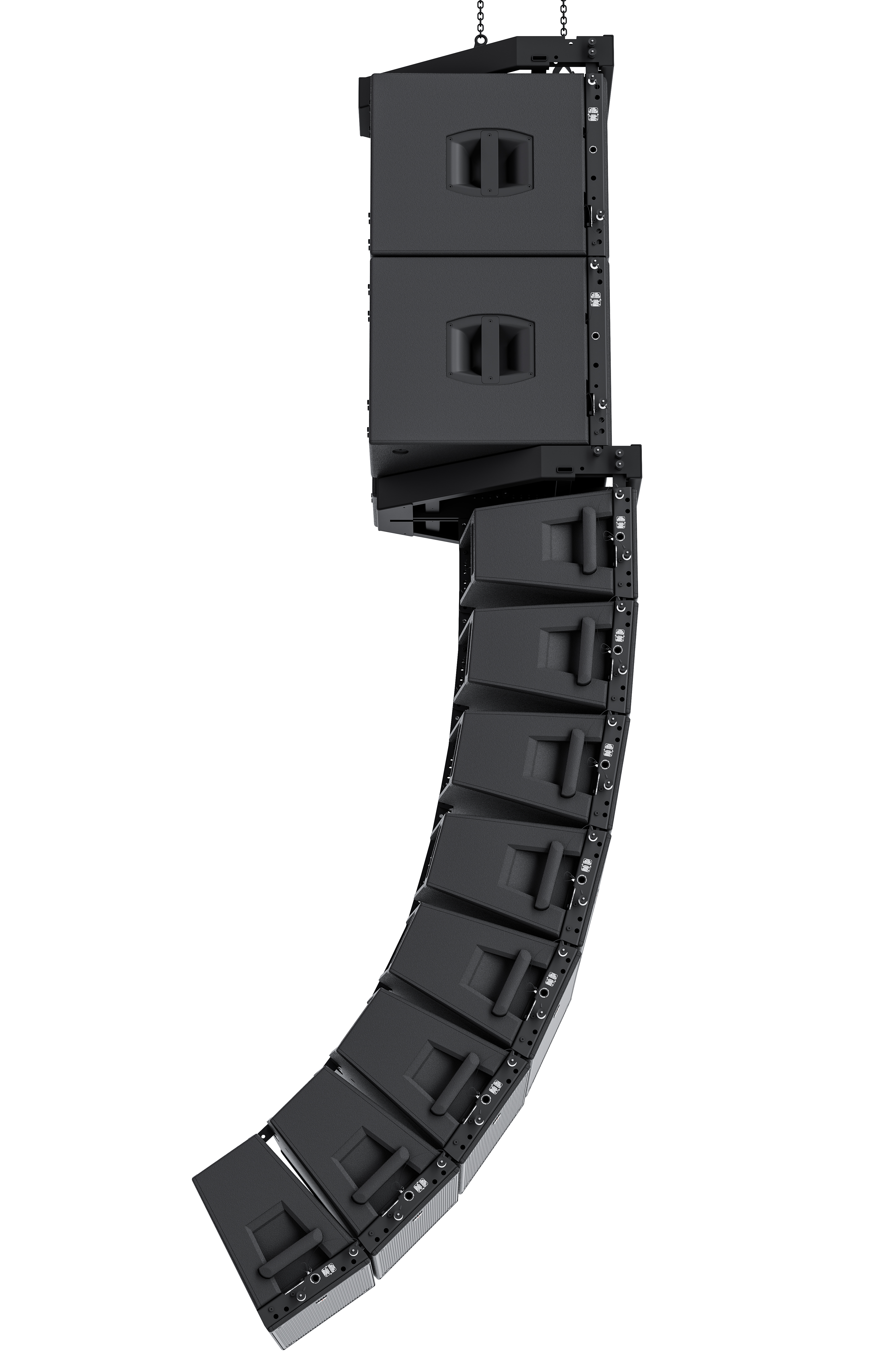
The backbone of most modern large-venue PA speaker systems is the large-scale line array.
The acoustic advantage of a line array derives from its ability to approximate cylindrical wave propagation within its effective coupling range. In practical terms, this results in slower SPL attenuation over distance compared to traditional point-source systems. While ideal point sources experience a 6 dB drop per doubling of distance, well-designed line arrays can reduce this attenuation rate under defined conditions, helping maintain level consistency between near and far seating areas.
However, distance performance alone is insufficient. Precision in vertical directivity control is critical. Through mechanical splay angle design and DSP optimization, vertical beamwidth can be tightly controlled—often adjustable in small increments. This allows sound energy to be directed precisely toward audience geometry while avoiding ceilings and reflective rear walls.
Equally important is predictable inter-module coupling. Carefully engineered waveguides and driver spacing ensure smooth phase interaction between adjacent cabinets, reducing comb filtering and maintaining consistent frequency response throughout the coverage zone.
Mechanical engineering also plays a decisive role. Large venues frequently require multi-ton suspended arrays. Structural integrity, certified rigging components, and load-distribution calculations are non-negotiable for safety compliance.
At Guangzhou LASE SOUND Co., Ltd., our large-format line array platforms are engineered with integrated flyware systems, optimized waveguide geometry, and DSP-aligned preset libraries to simplify deployment while maintaining acoustic precision. For integrators and touring providers, this translates into accurate system prediction, reduced on-site adjustment time, and greater confidence during project bidding.
While line arrays dominate large-scale reinforcement, constant directivity horn technology remains essential in many fixed-installation and distributed reinforcement scenarios within theatres, arenas, and multipurpose halls.
Traditional horn geometries often exhibit narrowing high-frequency dispersion and widening low-frequency coverage, leading to uneven tonal balance across seating zones. Constant directivity horn design addresses this limitation by maintaining relatively uniform dispersion characteristics across a broad bandwidth.
The engineering benefit is twofold. First, listeners seated off-axis experience minimal tonal coloration, preserving intelligibility and musical balance. Second, predictable horizontal and vertical coverage angles allow system designers to match loudspeaker dispersion to architectural geometry with precision.
Coverage angle selection—such as 90° × 60° or 60° × 40°—must be determined through modeling rather than assumption. Improper selection can result in excessive boundary reflections or under-coverage gaps.
High-efficiency compression drivers, when properly integrated with constant directivity horns, deliver strong acoustic output with reduced distortion. This improves clarity in speech-heavy applications such as sports announcements, theatrical dialogue, and conference events.
Guangzhou LASE SOUND Co., Ltd. integrates optimized horn geometries and driver alignment into our installation-focused PA speaker systems to ensure consistent off-axis response and high-definition vocal reproduction, particularly in reverberant environments.
Modern PA speaker systems for large venues must incorporate advanced digital signal processing and network-based supervision.
Integrated DSP provides factory-optimized presets tailored for arrayed configurations, stacked deployments, or delay-fill roles. Beyond preset operation, advanced users require granular control—parametric equalization, FIR filtering for phase linearization, and dynamic limiting to protect transducers without sacrificing performance.
Time alignment across multiple zones—main arrays, side fills, under-balcony systems, and delay towers—requires precise millisecond-level delay adjustments. Without accurate temporal synchronization, even high-quality loudspeakers can produce phase interference and intelligibility loss.
Network monitoring has become equally critical. Ethernet-based control enables real-time tracking of amplifier temperature, output voltage, impedance status, and fault conditions. Preventative maintenance strategies rely on such data to minimize downtime and performance interruptions.
For large touring productions and permanently installed venues alike, remote diagnostics reduce operational risk. Our PA speaker systems incorporate built-in DSP modules and network-ready architecture, allowing technical teams to supervise system health and make adjustments without physical access to rigged arrays.
This layer of intelligence transforms loudspeakers from passive devices into managed system components.
Hardware capability alone does not guarantee performance. System design methodology determines the final acoustic outcome.
Three-dimensional acoustic modeling is essential. By importing venue geometry into professional prediction software, engineers can simulate array height, splay angles, and cabinet quantity before installation. This predictive workflow reduces guesswork and ensures coverage uniformity targets are met prior to deployment.
Large venues typically require zoned reinforcement strategies. Main arrays serve primary seating. Side arrays address lateral coverage. Delay towers extend projection into remote sections. Under-balcony fills compensate for shadowed regions. Each zone must be time-aligned and level-balanced to preserve coherent imaging.
Low-frequency management requires particular attention. Cardioid or end-fire subwoofer configurations can direct low-frequency energy toward the audience while minimizing rear-stage buildup. This improves clarity on stage and reduces structural vibration.
Precise measurement and calibration using calibrated microphones and real-time analysis software ensure that theoretical modeling translates into measurable performance.
At Guangzhou LASE SOUND Co., Ltd., our engineering team supports clients with acoustic modeling consultation, subwoofer array planning, and final system optimization guidance, helping transform complex venue challenges into predictable outcomes.
In stadium and festival main stages, long-throw projection, wind stability, and weather-resistant enclosures are key performance criteria. High-output line arrays combined with directional subwoofer arrays ensure consistent experience for audiences numbering in the tens of thousands.
In theatres and performing arts centers, visual integration and low ambient noise are equally important. Compact arrays or distributed point-source systems must deliver exceptional clarity while respecting architectural aesthetics.
In multipurpose arenas and exhibition halls, flexibility becomes paramount. Systems must accommodate sporting events, concerts, corporate gatherings, and trade exhibitions without requiring structural reconfiguration. Networked amplifier racks and modular array components support rapid adaptation between event types.
Across all these scenarios, the design objective remains consistent: controlled coverage and preserved clarity.
Emerging trends continue to shape system architecture. Beam-steering technology enables electronically adjustable directivity without mechanical repositioning. Immersive audio integration introduces multi-dimensional spatial reproduction within large-scale reinforcement frameworks. AI-assisted optimization tools promise to reduce commissioning time and enhance measurement precision.
Simultaneously, sustainability considerations are influencing equipment design. High-efficiency Class-D amplification and lightweight composite materials reduce energy consumption and transportation impact—aligning with global environmental standards.
PA speaker systems that fail to incorporate upgrade pathways and digital integration risk rapid obsolescence in this evolving landscape.
Achieving maximum coverage and clarity in large venues demands more than powerful loudspeakers. It requires a comprehensive engineering approach encompassing directivity control, phase alignment, digital processing, and predictive modeling.
Advanced PA speaker systems provide the hardware foundation—but disciplined system design unlocks their full potential.
With more than ten years of experience in professional audio manufacturing, Guangzhou LASE SOUND Co., Ltd. delivers large-scale line array systems, constant directivity solutions, and network-integrated DSP platforms engineered around the principles of precision coverage and sonic clarity. We support OEM/ODM customization and provide technical assistance in acoustic modeling, system configuration, and on-site optimization.
If your next stadium, theatre, or arena project demands uncompromising performance, we invite you to connect with our technical team. Together, we can design PA speaker systems that transform complex spaces into benchmark acoustic environments.


 EN
EN

 Hot News