When the spotlight illuminates the lead vocalist and the audience is immersed in a powerful Front of House (FOH) mix, a crucial question often goes unasked: what are the performers actually hearing on stage?
No matter how advanced the PA system may be, if artists cannot clearly hear themselves or their fellow musicians, performance quality inevitably suffers. Timing falters. Pitch confidence declines. Communication breaks down.
This is where monitor speakers become indispensable. In the ecosystem of professional live sound, monitor speakers are not auxiliary devices—they are the confidence backbone of the entire performance. They bridge the gap between technical execution and artistic expression.
From our experience serving rental companies, system integrators, and venue technical directors worldwide, we have consistently observed that artist satisfaction and repeat project opportunities are closely tied to the reliability of the stage monitoring system. A flawless FOH mix cannot compensate for poor on-stage monitoring.
As a long-established B2B manufacturer in professional audio, Guangzhou LASE SOUND Co., Ltd. approaches monitor speakers not merely as products, but as mission-critical tools engineered to safeguard performance stability. We combine acoustic engineering, structural durability, and system integration expertise to help our partners deliver consistent, tour-ready monitoring solutions that enhance artist confidence and ultimately elevate brand reputation.
Among modern monitor speakers, coaxial active designs represent a significant evolution in acoustic coherence and feedback resistance.
In traditional two-way monitor designs, the high-frequency and low-frequency drivers are physically separated. This spatial offset can introduce phase inconsistencies, especially in near-field listening conditions typical of stage monitoring.
A coaxial configuration places the high-frequency driver concentrically within the low-frequency driver. The result is a true point-source acoustic behavior. For performers, this translates into more stable imaging and improved vocal localization. Singers can “lock in” to their pitch more naturally because the sound appears to originate from a single, consistent source.
In high-demand environments such as televised productions and premium music festivals, this precision becomes a decisive advantage. Engineers can maintain tonal clarity without excessive corrective EQ, preserving natural timbre in live sound conditions.
One of the most valued metrics in professional stage monitoring is Gain Before Feedback (GBF). The ability to achieve higher SPL at the performer’s position without triggering feedback directly impacts performance confidence.
Coaxial monitor speakers, due to their symmetrical dispersion and controlled directivity, often provide superior GBF compared to conventional wedge designs. This allows vocalists to request more level in their mix without compromising system stability.
For rental companies and broadcast production providers, this means reduced troubleshooting time and smoother changeovers between artists. When paired with integrated DSP processing—featuring factory-optimized presets, delay alignment, and protective limiting—active coaxial monitors significantly streamline setup workflows.
For B2B clients handling high-pressure productions, recommending DSP-equipped coaxial monitor speakers can dramatically improve on-site efficiency and consistency.
While coaxial monitors excel in precision environments, large-scale concerts and high-energy genres demand raw acoustic authority.
Rock concerts, outdoor festivals, and stadium events often generate extreme ambient noise levels. Drummers and guitarists require substantial acoustic output to maintain rhythmic cohesion.
High-power two-way wedge monitor speakers, typically equipped with 12-inch or 15-inch low-frequency drivers and high-performance compression drivers, can achieve maximum SPL levels exceeding 130 dB, and in some configurations, even approaching 140 dB.
This high dynamic headroom ensures signal intelligibility even in the most demanding stage conditions. Importantly, adequate headroom also reduces distortion at peak levels, preserving sonic clarity under stress.
For live sound providers serving large venues, headroom is not a luxury—it is a safeguard against compromised performance.
Durability is equally critical. Touring monitor speakers must withstand frequent transport, stacking, and impact. Multi-layer birch plywood enclosures, reinforced internal bracing, and wear-resistant coatings are essential structural elements.
For rental companies, long-term return on investment depends on mechanical reliability and ease of maintenance. Standardized driver configurations and modular component access reduce downtime and simplify spare part management.
At Guangzhou LASE SOUND Co., Ltd., we engineer our wedge monitor speakers with a focus on structural integrity, thermal management, and service accessibility. This ensures that partners operating in demanding touring markets can rely on equipment longevity while minimizing lifecycle costs.
Modern stage monitoring is no longer confined to floor wedges alone. The integration of in-ear monitoring (IEM) systems and side-fill loudspeakers has reshaped performance expectations.
Side-fill systems extend monitoring from localized “spot listening” to broader spatial immersion. Positioned at the sides of the stage, they create a stereo image that enhances ensemble cohesion.
Even in setups where performers use IEMs, side-fills can provide low-frequency reinforcement and ambient energy that in-ear systems may lack. Many artists prefer the physical sensation of air movement and low-frequency impact—an experience traditional wedge monitor speakers naturally deliver.
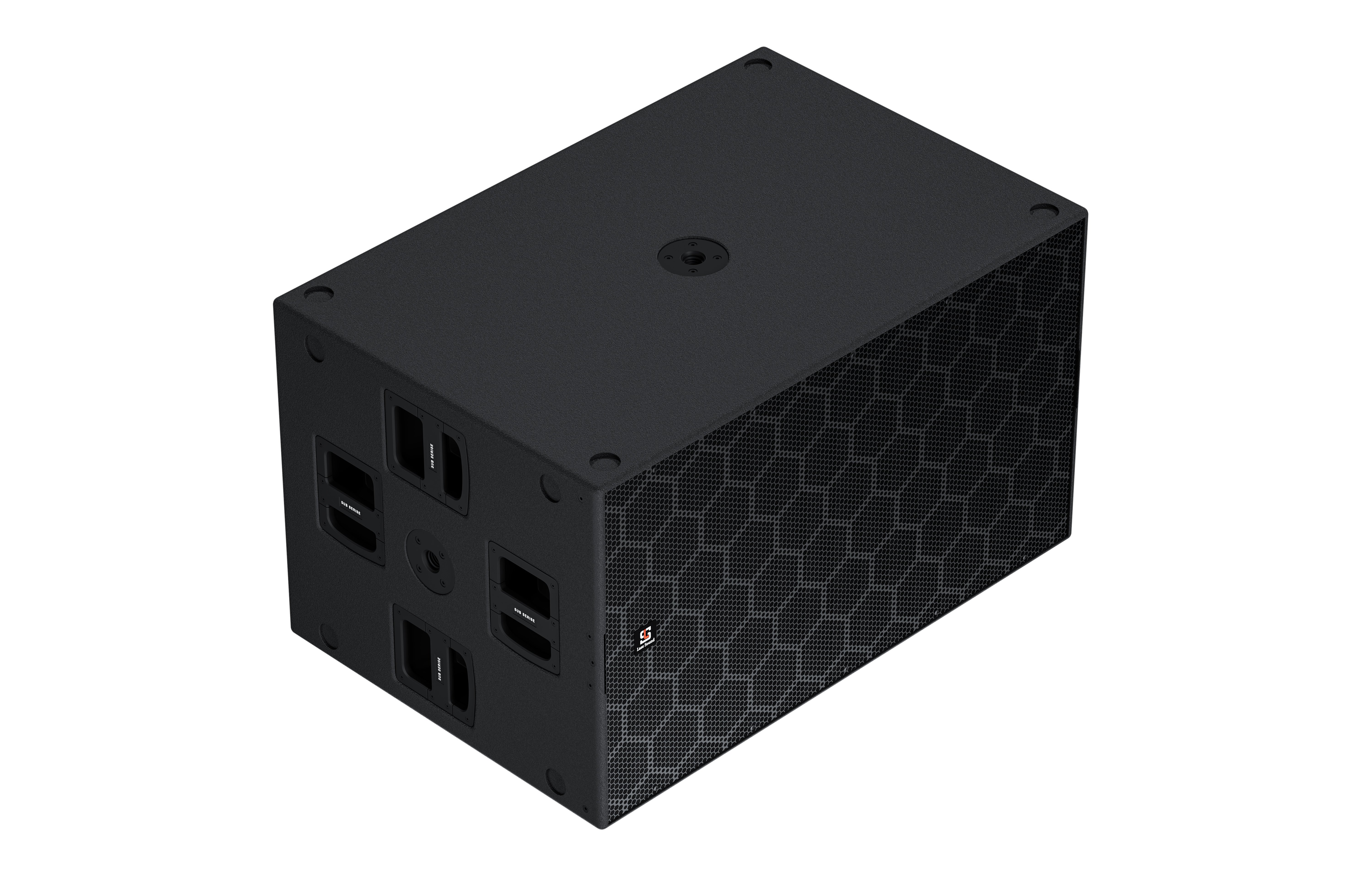
Rather than replacing wedges, IEMs often function in parallel. Drummers may combine IEM clarity with a dedicated subwoofer for tactile impact. Vocalists may use a wedge for crowd interaction while maintaining a personalized in-ear mix.
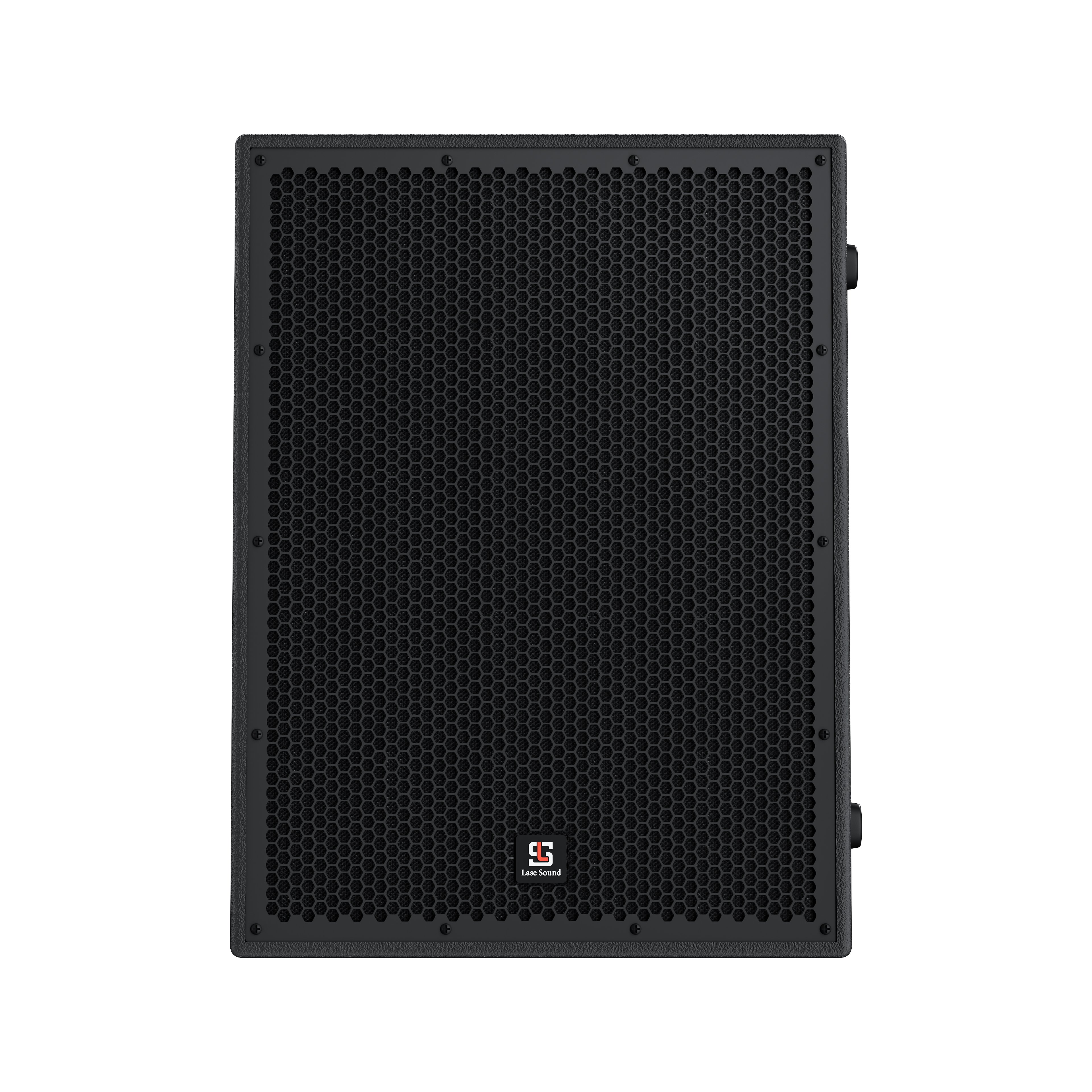
For system integrators and installation contractors, offering a comprehensive monitoring portfolio—including wedge monitor speakers, side-fills, drum subs, and IEM support—simplifies procurement and ensures tonal consistency across the stage.
As a one-stop professional audio manufacturer, Guangzhou LASE SOUND Co., Ltd. supports OEM/ODM customization for integrated monitoring ecosystems, enabling partners to deliver unified sonic performance across diverse project requirements.
Monitor speakers are only one component within a broader signal infrastructure.
Digital mixing consoles now enable complex multi-bus monitor mixing, often providing each performer with an independent mix. High-quality signal splitters ensure FOH and monitor paths remain electrically isolated, preventing ground loops and signal degradation.
For passive monitor speakers, correct amplifier matching and processor configuration are fundamental. Power ratings must align with driver capabilities to avoid thermal stress, while DSP presets should be precisely calibrated to enclosure acoustics.
Providing verified amplifier recommendations and optimized processor settings is not merely a technical detail—it is a demonstration of engineering credibility. In competitive tenders, this level of documentation strengthens E-E-A-T credentials by proving real-world expertise.
Feedback management is often misunderstood as simply “cutting frequencies.” In reality, effective control requires a systematic approach.
Strategic placement of monitor speakers—minimizing direct microphone pickup angles—reduces acoustic loop potential. Narrow-band notch filters can suppress problematic frequencies while preserving overall tonal integrity.
Excessive equalization, however, can degrade sound quality and reduce system headroom. A well-designed monitor speaker with controlled dispersion reduces reliance on aggressive corrective EQ in the first place.
From a system design perspective, acoustic optimization begins with enclosure geometry and horn design—not just post-processing.
The monitoring landscape continues to evolve alongside broader live sound trends.
Audio-over-IP protocols such as Dante and AES67 are increasingly integrated into stage environments. Engineers can adjust monitor mixes remotely via tablets, while performers may control personal monitor levels through dedicated interfaces.
This network-centric architecture reduces analog cabling complexity and improves signal routing flexibility—features now expected in high-end rental markets.
The adoption of neodymium magnet drivers enables significant weight reduction without compromising acoustic performance. For international touring companies, reduced weight directly translates into lower logistics costs and faster deployment.
Manufacturers capable of balancing lightweight construction with structural durability provide tangible operational advantages to rental partners.
Monitor speakers are more than floor wedges—they are the performers’ psychological anchor. When artists hear themselves clearly, they perform with conviction. When monitoring fails, even the most advanced PA system cannot compensate.
Whether you are preparing for a large-scale music festival, designing a fixed-install theatre system, or bidding on a broadcast production contract, the technical specifications of monitor speakers represent only part of the equation. The deeper question is whether the solution truly addresses the performer’s need to “hear with confidence.”
As your professional audio manufacturing partner in China, Guangzhou LASE SOUND Co., Ltd. provides comprehensive services ranging from OEM/ODM production to customized private-label development. Our engineering team brings extensive experience in acoustic structure optimization, amplifier matching, and touring-grade enclosure design.
We understand that for rental companies, event planners, system integrators, and venue technical directors, reliability is reputation.
If you are evaluating monitoring solutions for your next project, we invite you to connect with our team. Let us collaborate to design a stage monitoring system that empowers performers, strengthens your competitive positioning, and ensures that the heroes on stage receive the sound they can trust.


 EN
EN

 Hot News