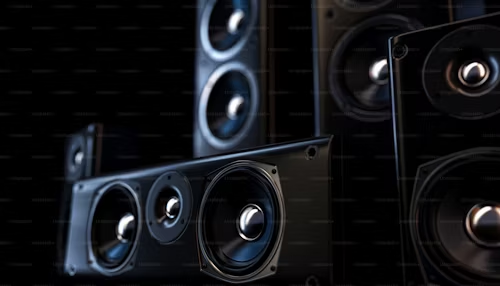
In the ever-evolving landscape of high-fidelity audio, the greatest trap for enthusiasts and professionals alike is the "all-or-nothing" purchase cycle. Too often, I see integrators discard perfectly good amplifiers simply because the digital interface has become obsolete. As a systems integration expert, my philosophy is built on an "Infrastructure-First" strategy. By investing in a robust, high-performance Audio Systems backbone—what I call the "brain"—you gain the freedom to upgrade your "limbs"—the loudspeakers and power stages—whenever your budget or room requirements evolve.
The secret to a future-proof setup lies in the core of your Audio Systems. If you prioritize a high-quality pre-amplifier or a network-capable digital bridge, you create a stable foundation. This approach turns your Audio Systems into a living ecosystem rather than a stagnant collection of hardware. When you focus on a modular Audio Systems foundation, you are essentially buying a chassis that will last a decade, while the specific processing modules can be swapped to keep pace with modern standards.
Why invest in modularity? In the current market, digital protocols shift rapidly. High-end Audio Systems that rely on modular internal cards offer a distinct advantage. If a new format like an advanced MQA iteration or a future DSD standard arrives, you shouldn’t have to discard an expensive analog machine. You simply swap a small digital card. This modularity is a testament to the build quality, utilizing precision-milled aluminum chassis that provide the electrical shielding necessary for sensitive internal circuitry.
When we discuss the "professional-consumer" hybrid—devices designed with XLR balanced connections—we are talking about long-term reliability. Balanced XLR connectivity in your Audio Systems ensures that you can extend your signal path over long distances, such as from a basement control room to a main hall, without the signal degradation common in unbalanced RCA cables.
A truly flexible Audio Systems build must be backed by global standards. Professionals know that when you integrate equipment, you are inviting power surges and interference risks. That is why I only recommend Audio Systems that carry the following certifications:
The physical scalability of an Audio Systems configuration is often overlooked. Your path to sonic perfection should look like a roadmap:
When I refer to an Audio Systems as an "Operator Sound System," I am highlighting the interface between the user and the acoustic output. An effective Audio Systems should function as an extension of the engineer’s intent. Whether you are mixing a live event or fine-tuning a home theater, the Audio Systems must provide a transparent, flat frequency response. Using precision-engineered magnetic fluid in our driver testing, we have found that high-fidelity Audio Systems maintain their composure even when pushed to high volume, ensuring that every detail is preserved.
Price-to-performance ratio is the defining metric of any Audio Systems procurement. A modular Audio Systems setup might cost more upfront, but when you avoid the need for a total equipment refresh every three years, the ROI becomes undeniable. By selecting Audio Systems with upgradeable firmware and hardware cards, you are securing your capital.
Date: March 12, 2024
Location: The Metropolitan Media Hub, Chicago
Case Name: "The Scalable Studio Transformation"
Solution: The client started with a simple stereo network-based Audio Systems bridge. As their needs grew, we integrated a modular multi-channel card into the existing chassis. Within an afternoon, we transformed their compact home-office setup into a full-scale 5.1 Audio Systems array for professional video editing, all without replacing the core processing unit. The client saved approximately 40% in hardware costs compared to a full system overhaul.
Building a high-end Audio Systems configuration is a marathon, not a sprint. Do not be seduced by "all-in-one" units that offer high specs but zero path for growth. Instead, seek out Audio Systems that allow you to grow, upgrade, and adapt.
Whether you are managing a small home studio or a sophisticated network-audio ecosystem, remember that the "brain" of your Audio Systems is your most important asset. By prioritizing balanced connectivity, certified safety, and modular internal architecture, your Audio Systems will remain relevant for years to come.
As we look toward the next generation of spatial audio and ultra-high-resolution streaming, your Audio Systems choice today will determine your technical capabilities tomorrow. Invest in a platform, not just a product; invest in an Audio Systems infrastructure that evolves alongside your passion. In the world of high-fidelity, the best Audio Systems is the one that grows with you, delivering clarity and authority at every stage of your journey. As you continue to curate your sound, let your Audio Systems be the quiet, powerful heartbeat of your creative space.


 EN
EN
 Hot News