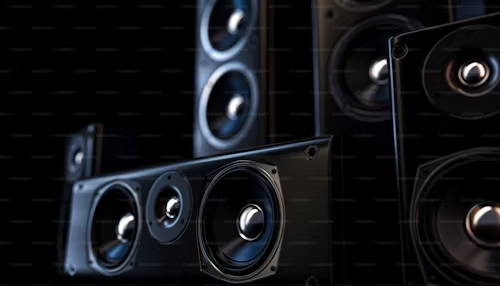
Investing in a live concert sound system requires choosing between the rapid deployment of mobile touring rigs and the architectural integration of permanent venue audio installations. This procurement guide examines rigging structural loads, amplification architecture, acoustic coverage modeling, and long-term asset ROI so you can commission a professional live concert sound system that avoids costly structural refits and system downtime.
Rigging Hardware: Fast Touring Pins vs. Architectural Mounts
A live concert sound system designed for touring requires captive, angle-adjustable rigging for rapid load-ins, while an installation system prioritizes low-profile mounting hardware and architectural integration. In mobile touring environments, every minute spent working on the fly grid increases production labor costs. Touring enclosures feature internal side-mounted aluminum rigging arms with drop-in captive quick-release ball lock pins. Technicians can dial in splay angles between cabinets in 0.5-degree or 1-degree increments while the boxes are still rolling on transport wheelboards:
1. Pre-Rigging Alignment: Splay angles are pre-pinned flat on the arena deck, allowing the line array cluster to curve automatically into its intended acoustic shape as the electric chain motors lift the bumper bar.
2. Structural Load Certification: Heavy touring rigging frames feature stamped, certified working load limits (WLL) designed to withstand high dynamic shock loads and environmental wind shearing during open-air arena performances.
3. Streamlined Cabling Paths: Integrated rigging pins preserve clean speaker line runs down the spine of the array, preventing wire pinches during daily strikes.
Conversely, a fixed-installation venue sound system eliminates these heavy external hinge plates and pinned joints to reduce physical bulk and prevent audience sightline obstructions. Permanent cabinets use discreet M10 or M12 internal threaded forged eyebolt points, certified U-brackets, or custom-engineered ceiling yoke cradles. These low-profile mounting brackets hold the loudspeaker at a permanently fixed down-tilt angle aimed at the seating plane. By stripping away heavy touring-grade aluminum rigging cages, installation variants reduce dead weight on historical roof trusses and present clean, unobtrusive aesthetics that blend into theater proscenium arches or house-of-worship architecture.
Power and DSP Architecture: Mobile Racks vs. Central Control Rooms
Touring concert audio equipment relies on shock-mounted amp racks with multi-pin break-outs, whereas fixed concert installations use remote-monitored equipment rooms with unified AV networks. The underlying philosophy of power distribution dictates operational uptime, daily maintenance overhead, and emergency protocols for any live event sound system.
Mobile productions depend on standardized touring amplifier racks containing multi-channel class-D power stages, network splitters, and dedicated power distribution units (PDUs). These racks roll on heavy casters and connect to the array using multi-conductor loudspeaker cables with heavy-duty multi-pin connectors. Instead of running dozens of individual cables, a single heavy-gauge multi-pin cable runs up to the line array bumper, distributing eight to twelve amplified channels across sub-bass cabinets, mid-woofers, and high-frequency compression drivers.
| Engineering Attribute |
Mobile Touring Sound System |
Fixed Venue Sound System Installation |
| Rigging Hardware |
Captive rigging frames, locking quick-pins |
M10/M12 eyebolts, structural cradles, wall yokes |
| Enclosure Protection |
Polyurea coating, aluminum grilles, rain hoods |
Custom RAL matching finishes, discreet acoustic foam |
| Power Distribution |
Shock-mounted flight-case racks, high-power PDUs |
Centralized server racks in isolated control rooms |
| Signal Routing |
Multi-pin analog/AES snakes with manual backup |
Redundant Dante/Milan networks, fiber-optic links |
| Facility Emergency Link |
Standalone console master mute |
Automated GPIO integration to building fire alarms |
| System Resale Value |
High liquidity; standardized rental-market asset |
Lower liquidity; customized to specific architectural spaces |
In fixed installations, amplifiers and primary DSP processors live inside a temperature-controlled server room isolated from the main auditorium. High-voltage 70V/100V lines or thick low-impedance cables run through permanent conduits hidden behind acoustic wall panels. The entire concert sound system runs on redundant Dante or Milan AVB network protocols over structured fiber-optic cabling, linking FOH consoles, stage boxes, and processing engines. These systems also include physical GPIO dry-contact relays wired into the facility’s life-safety emergency panels. If a smoke detector trips, the sound system instantly mutes all audio and hands over ceiling delay zones to building emergency evacuation microphones.
Acoustic Dispersion: Symmetrical Touring Arrays vs. Zoned Fills
A touring live concert sound system uses symmetrical vertical line arrays for long-throw projection, while an installed system relies on distributed point-source delay fills to manage complex room reflections. Mobile sound companies deploy high-output concert line array speakers because their narrow vertical and wide horizontal dispersion cuts through air turbulence, delivering even front-to-back SPL over long distances across festival grounds and arenas.
However, complex architectural spaces—such as historic multi-tier theaters, cavernous cathedrals, or long, low-ceiling live venues—often create acoustic challenges that an oversized main array cannot solve alone:
- Under-Balcony Shadowing: Deep structural overhangs block line-of-sight sound waves from the main stage arrays, leaving lower-tier patrons in an acoustic dead zone.
- Reflective Boundary Interference: Parallel masonry walls and domed ceilings reflect stray wide-dispersion sound, transforming vocal articulation into an unintelligible wash.
- Precision Delay Fill Networks: A comprehensive installation pairs a smaller primary stage sound system with compact, time-aligned point-source speakers mounted under balconies, across front stage lips, and along side walkways.
- Phase-Aligned Processing: Dedicated matrix delays feed audio to these peripheral fill speakers milliseconds before primary wavefronts arrive, preserving the acoustic Haas effect and maintaining clear vocal imaging across every seat.
Environmental Durability: Road Resilience vs. Climate Demands
Road-worthy touring gear demands heavy-duty mechanical protection and weatherized driver components, while permanent installations require long-term UV resistance and environmental stability. A touring live concert sound system faces punishing transport shocks, vibration, salt air, and sudden outdoor downpours. Touring cabinets are built from marine-grade birch plywood protected by high-impact polyurea elastomeric coatings, heavy-gauge steel grilles, and hydrophobic acoustic cloth that stops moisture from penetrating speaker cones without muffling high-frequency clarity.
Fixed systems, while spared daily forklift transport, face distinct environmental challenges. Subwoofers and line array clusters suspended in open-air amphitheatres endure months of direct sun, seasonal humidity changes, and steady temperature cycling:
- Waterproof Glands and Hoods: Outdoor installation enclosures use sealed, angled terminal covers with rubber compression cable glands to keep water from pooling around connection plates.
- UV-Resistant Treatments: Specialized UV-inhibiting clear coats prevent composite waveguides and grilles from fading or cracking over years of direct sunlight exposure.
- Architectural Finish Customization: Indoor venues often require custom neutral paint finishes matched to specific architectural RAL codes, allowing cabinets to blend into decorative plasterwork without creating visual distractions on stage.
Engineering Reliability: Why LASE SOUND Bridges the Gap
Whether your production demands rugged touring performance or clean architectural integration, dependable audio delivery requires precision manufacturing and field-tested acoustics. Live performance venues cannot afford driver failures, overheating amplifiers, or distorted vocal ranges during high-profile events.
This is where LASE SOUND provides proven live sound reinforcement solutions. Backed by a 13,500㎡ modern manufacturing plant, 286 acoustic engineering technicians, and an international distribution network spanning over 100 countries, LASE SOUND designs professional line array systems, touring amplifiers, and high-output subwoofers engineered for demanding applications. Their popular LA-Audio and A-Audio systems feature multi-ply birch plywood construction, certified high-tensile rigging options, and integrated DSP management. These features deliver the acoustic clarity, low distortion, and mechanical reliability audio professionals require for both international touring and world-class venue installations.
The 5-Step System Procurement Checklist
Procuring a live concert sound system requires a structured evaluation of physical limits, available power, logistics, and total cost of ownership. Before issuing an equipment RFP or signing an audio installation contract, review this essential five-point procurement checklist:
1. Verify Facility Load-Bearing Limits: Hire a certified structural engineer to inspect your venue's roof trusses, steel beams, and dead-hang rigging points to ensure they safely support your planned line arrays and motor weights.
2. Audit Electrical Infrastructure: Confirm your stage or control room has dedicated 3-phase power distribution (such as 32A or 63A drops) with isolated grounds to prevent electrical hum and circuit breaker trips during high-output sub-bass passages.
3. Establish Realistic Coverage Needs: Use predictive 3D acoustic mapping software (like EASE) to assess whether your space is better served by high-output vertical line arrays or a distributed point-source system with delay fills.
4. Plan Transport and Storage Dimensions: If buying for mobile touring, check that cabinet widths, fly-frames, and flight cases pack efficiently into standard freight trucks to minimize logistics costs.
5. Evaluate Long-Term Maintenance and Support: Choose an audio manufacturer that provides readily available diaphragm replacements, amplifier modules, and responsive warranty support to avoid production downtime.
Invest in the Right Concert Audio Infrastructure
Selecting the right live concert sound system turns audio performance into a dependable, high-yield asset that delivers pristine sound, smooth event operations, and lasting reliability. By balancing touring rigging speed and rugged construction against the subtle aesthetics, network control, and targeted coverage of fixed venue systems, your team can build an audio package that meets both your artistic goals and your budget.
Reach out to LASE SOUND to discuss your upcoming project requirements, request detailed predictive acoustic simulations, and discover concert-grade sound solutions engineered specifically for your venue or touring production.


 EN


 Hot News