Designing and deploying a high-performance audio system outdoors is fundamentally different from indoor applications. Unlike controlled indoor spaces, outdoor environments introduce a multitude of variables: wind, rain, temperature fluctuations, ultraviolet radiation, and vastly longer propagation distances. For system integrators, venue managers, and rental companies tasked with outdoor installations, a standard indoor line array speaker cannot simply be transplanted and expected to perform reliably. In this context, outdoor line array speakers are engineered to address these extreme conditions while delivering professional-level sound coverage. At Guangzhou LASE SOUND Co., Ltd., we specialize in designing, manufacturing, and deploying outdoor line arrays for festivals, sports stadiums, theme parks, and permanent installations, offering solutions that meet the highest engineering standards.
This article breaks down the engineering, operational, and business considerations behind outdoor line array speakers, providing a structured guide for evaluating, specifying, and investing in systems that are truly outdoor-ready.
Unlike indoor spaces, outdoor venues offer little acoustic assistance. There are no reflective walls or ceilings to reinforce coverage; all sound energy must travel directly to the audience. Environmental factors such as wind, humidity, rain, UV exposure, and extreme temperature swings can all degrade audio fidelity and reliability. Deploying a standard indoor line array outdoors often leads to unpredictable SPL distribution, reduced intelligibility, and increased component failure.
For systems designers, the challenge is twofold: first, the speakers must maintain predictable coverage and tonal balance across long distances; second, they must survive repeated exposure to harsh elements. Outdoor line array speakers are not a cosmetic adaptation of indoor models—they are a fundamentally engineered solution to these conditions.
The “outdoor” specification extends far beyond adding a rain hood. It is a system-level engineering requirement. At Guangzhou LASE SOUND Co., Ltd., our outdoor line arrays undergo rigorous design and testing processes:
IP-rated enclosure sealing: Achieving IP45 or higher requires precise joint sealing, gasketing, and internal ventilation control to prevent water ingress.
Corrosion-resistant hardware: Rigging points, bolts, and brackets are fabricated from stainless steel or treated for maximum rust resistance.
UV- and moisture-resistant components: Speaker diaphragms, adhesives, and foam materials must resist prolonged UV exposure and moisture.
PCB and driver protection: Internal electronics are coated with anti-condensation and anti-corrosion compounds to maintain reliability over years of outdoor use.
This design rigor ensures that the system can survive repeated deployments, inclement weather, and exposure to coastal or desert environments without compromising performance. For operators, these measures translate into fewer failures, lower maintenance costs, and higher long-term asset value.
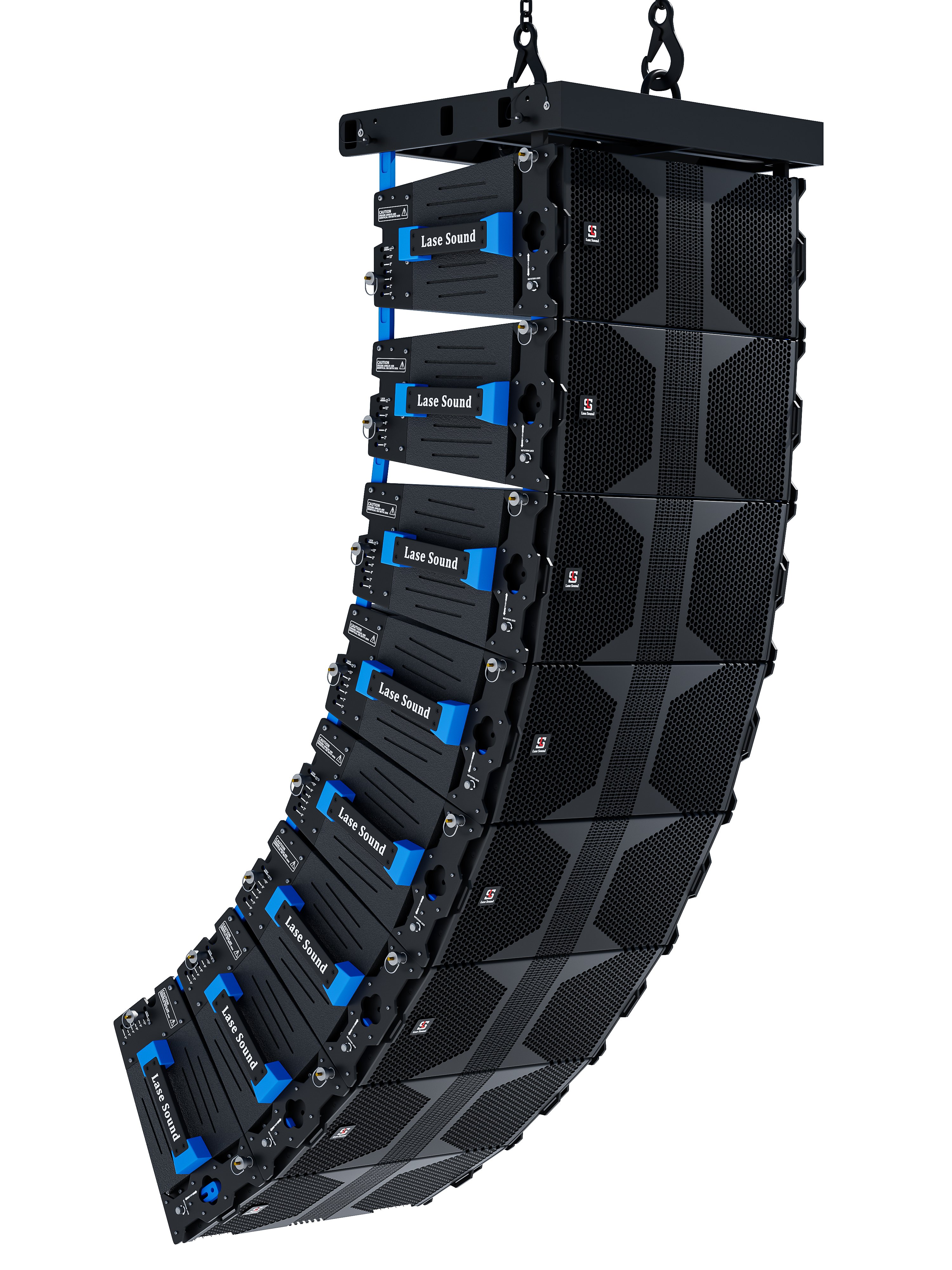
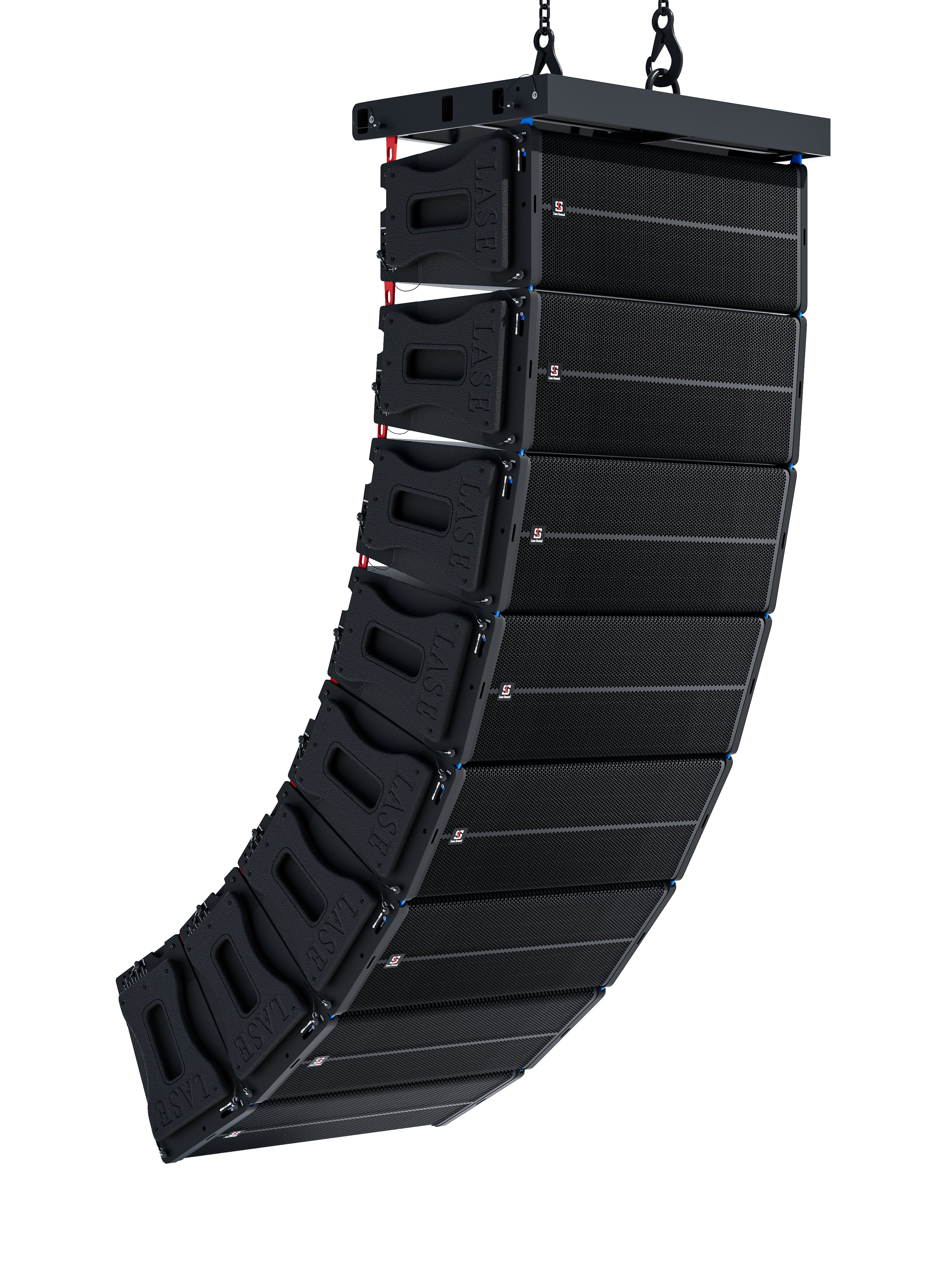
In outdoor environments, the directional control offered by a line array is even more critical. Unlike indoor venues, there are no reflective surfaces to reinforce the sound field. A well-engineered outdoor line array speaker focuses energy precisely toward the audience, minimizing dispersion into open air or upward toward the sky.
Key features include:
Optimized waveguide geometry: Waveguides and cabinet angles are carefully calculated to maintain coherent vertical coupling across multiple boxes.
Predictable vertical coverage: Accurate vertical beamwidth control ensures that SPL is uniform from front row to back, reducing hotspots and nulls.
Environmental compensation: Some systems incorporate DSP presets to adjust for atmospheric absorption at long distances, maintaining clarity in real-world conditions.
For venues spanning tens or hundreds of meters, precise array design reduces the number of required cabinets while achieving consistent coverage, ultimately saving on transport, setup labor, and operational complexity.
Outdoor line arrays are often called upon to produce higher sound pressure levels over long distances. The “speaker” component must be robust, thermally managed, and capable of sustained output. Key considerations include:
High-power drivers: Neodymium magnet designs provide higher sensitivity and SPL with lower weight.
Enhanced thermal management: Ventilated magnetic circuits and high-temperature voice coils prevent thermal compression during prolonged use.
Rugged cabinet construction: Materials such as marine-grade plywood or composite laminates resist deformation and damage during rigging and transport.
Continuous operational reliability: Systems are engineered to withstand extended festival schedules, multi-day sporting events, and repeated outdoor deployments without degradation.
From a business perspective, investing in speakers with proven endurance and thermal performance reduces maintenance costs, minimizes downtime, and protects reputation in high-stakes installations.
Before committing to a system, integrators and venue managers should scrutinize the following aspects:
Environmental Testing Reports: Beyond IP ratings, request salt spray tests, UV aging tests, and temperature/humidity cycling data. These validate the speaker’s long-term survivability.
Rigging and Accessories: Ensure that all hardware, connectors, and suspension elements are corrosion-resistant, easy to use, and designed for high-wind conditions. Look for built-in safety redundancy.
Acoustic Performance Verification: Ask for SPL and coverage simulation at realistic distances (e.g., 50–100 meters). Examine how low-frequency extension performs outdoors.
Maintenance and Serviceability: Modular designs that allow driver replacement or DSP module swaps on-site reduce long-term service costs. Confirm spare parts availability and support commitment from the manufacturer.
At Guangzhou LASE SOUND Co., Ltd., we provide comprehensive documentation, performance simulations, and lifecycle support to ensure that your investment meets both engineering and operational expectations.
While technical reliability is paramount, an engineered outdoor line array speaker delivers tangible business advantages:
Operational efficiency: Fewer failures, predictable setup, and reduced cabling errors shorten event prep time.
Scalability: Modular line arrays can be expanded or reduced depending on event size without compromising sound quality.
Client satisfaction and retention: Clear, powerful audio enhances audience experience, leading to repeat business and stronger brand credibility.
Long-term ROI: Durable, outdoor-rated designs reduce replacement cycles and protect capital investment over many event seasons.
By considering both technical and business dimensions, rental companies, system integrators, and venue managers can ensure that their audio infrastructure is future-proofed.
A properly engineered outdoor line array speaker system is not merely a product purchase—it is a long-term investment in reliability, performance, and operational efficiency. Compromising on design or environmental resilience can result in costly failures, unplanned maintenance, and damage to reputation.
If you are planning an outdoor project, provide your venue location, installation type (fixed or touring), and key climate challenges. Our engineering team at Guangzhou LASE SOUND Co., Ltd. can deliver a customized Outdoor Acoustic & Reliability Analysis, specifying optimal array configurations and demonstrating system resilience under your specific conditions. Investing in verified, purpose-built outdoor line arrays ensures that your audience hears every note clearly, regardless of the elements.
Everest, F.A., & Pohlmann, K.C. Master Handbook of Acoustics, 7th Edition, McGraw-Hill, 2021.
ANSI/ASA S1.13-2020: Standard on Outdoor Loudspeaker Testing Procedures.
Research on IP-rated enclosures for professional audio applications (AES Technical Documents, 2019).
Field performance reports from large-scale outdoor festival installations, Guangzhou LASE SOUND Co., Ltd., internal case studies, 2022–2025.


 EN
EN
 Hot News