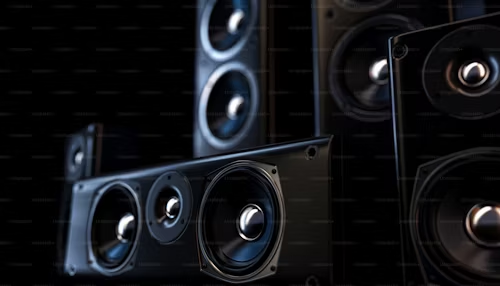
For decades, the primary challenge in large-scale sound reinforcement has been achieving consistent audio clarity and even coverage across an entire audience. Traditional point-source speaker systems, while effective for smaller venues, struggle with significant acoustic limitations in larger, more complex spaces. The inherent trade-off between volume, distance, and intelligibility often resulted in a compromised listener experience; those near the speakers faced overpowering sound pressure, while those in the rear heard a muddy, reflected mess of delayed and attenuated audio. The fundamental breakthrough arrived with the widespread adoption and refinement of line array technology. Unlike conventional speakers that radiate sound in a spherical pattern, a modern line array speakers system is engineered to solve these problems through wavefront coupling. By aligning multiple enclosures vertically and leveraging the physics of constructive interference, these systems create a coherent, cylindrical wavefront. This technical evolution allows sound engineers to precisely shape the vertical dispersion of sound, effectively targeting the audience area while minimizing energy wasted on ceilings, empty walls, and other reflective surfaces. The pursuit of perfect clarity, therefore, begins with selecting and deploying the right line array speakers, designed from the ground up for accurate and predictable performance.
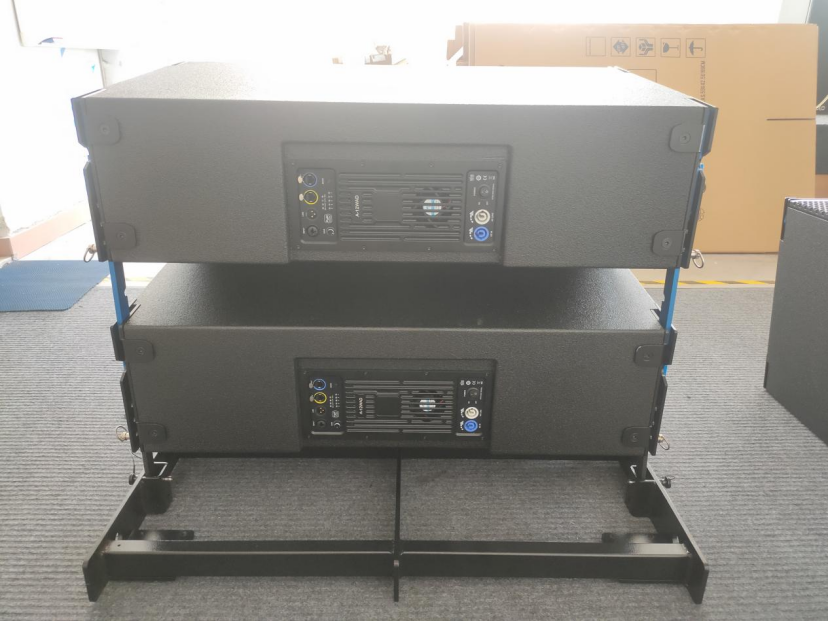
The superiority of a well-designed line array speakers system is not accidental; it is the direct result of specific engineering features that work in concert to maximize speech and music intelligibility.
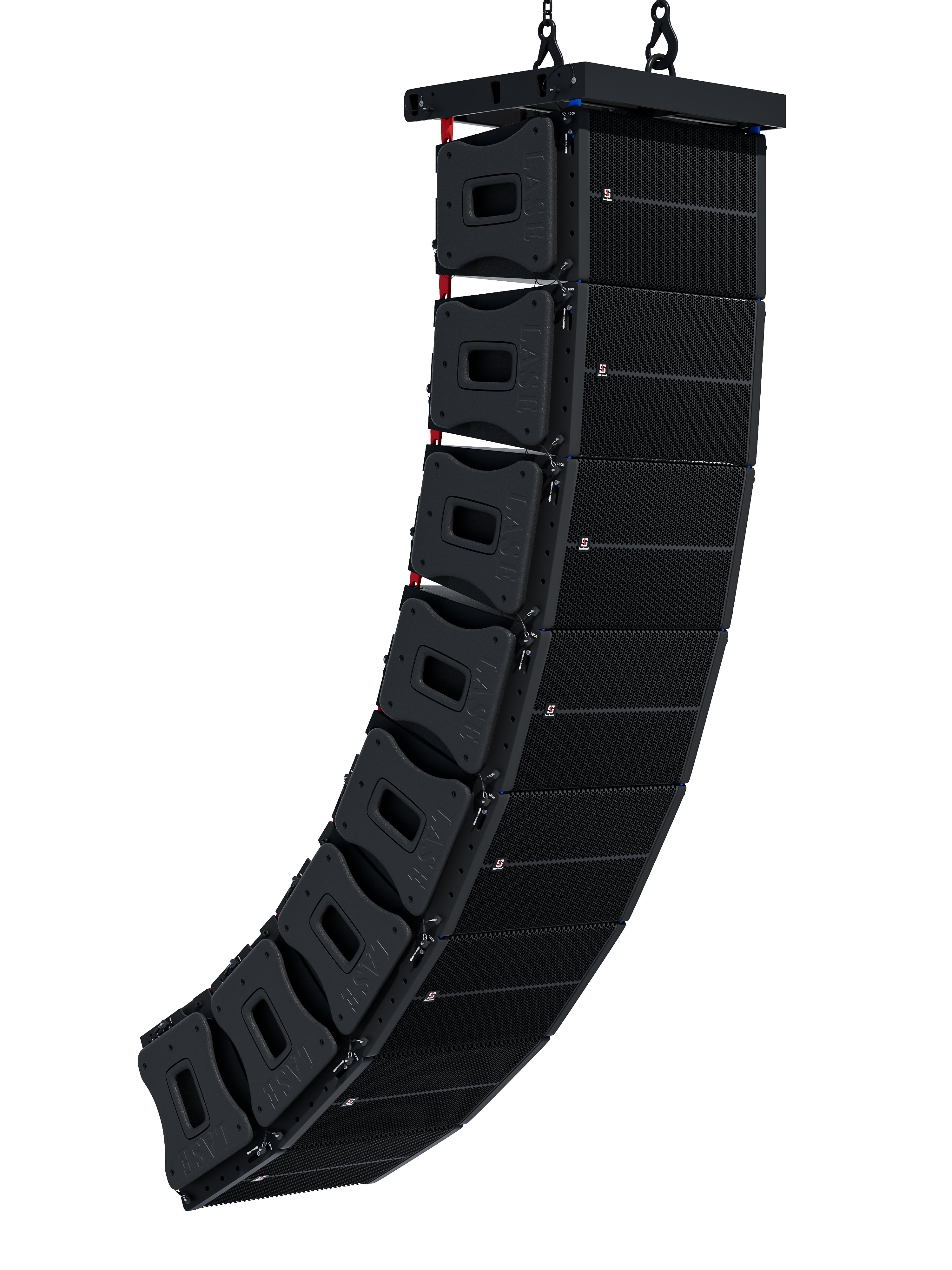
The most critical feature of any high-performance line array speakers is its ability to provide exact vertical directivity control. Each cabinet is designed with carefully calculated waveguide geometry and driver alignment. When multiple cabinets are curved in a J-shaped array, the system electronically and mechanically manipulates the phase relationship between adjacent cabinets. This enables the sound wave to be steered downward, focusing acoustic energy directly onto the audience and away from the ceiling and floor. This precise control is paramount for clarity, as it drastically reduces destructive reflections from hard surfaces that smear transients and obscure lyrical and instrumental detail. The best line array speakers offer predictable, software-modelable coverage patterns, turning guesswork into a science.
A key advantage that sets professional line array speakers apart is their ability to maintain spectral balance and clarity over long distances. In a point-source system, high frequencies attenuate rapidly with distance, causing the sound to become dull and lacking definition for rear-seat listeners. A properly configured line array speakers system overcomes this through its coherent wavefront. High-frequency drivers waveguides are designed to maintain their directivity, ensuring that high-end detail is projected effectively. The result is a remarkably consistent frequency response from the front row to the very back of the venue. Listeners everywhere experience the same sonic character, clarity, and impact, which is the hallmark of a world-class sound reinforcement installation.
Perhaps the most significant operational benefit for audio engineers is the simplification of system design and optimization. Modern line array speakers are designed to be integral components of a larger, predictable system. Their inherent directional control and arrayability reduce the complex calculations traditionally associated with combining multiple point-source cabinets. Furthermore, manufacturers provide sophisticated proprietary prediction software. These tools allow engineers to virtually design the array—selecting the number of cabinets, splay angles, and aiming points—and receive an accurate model of the coverage and frequency response throughout the venue. This dramatically reduces the time required for deployment and tuning on-site, ensuring optimal clarity is achieved faster and more reliably.
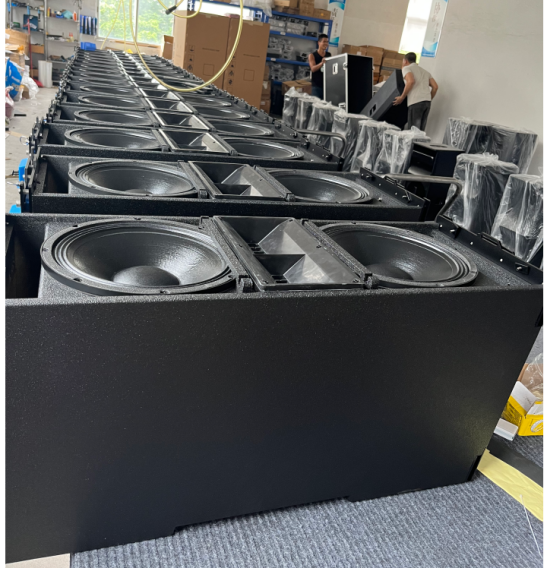
Implementing a line array speakers system for optimal clarity is a methodical process that extends beyond simply hanging cabinets. It begins in the pre-production phase with detailed modeling. Using the prediction software provided by the manufacturer, the system engineer imports the venue's architectural drawings. The software calculates the ideal cabinet count, curvature (splay angles), and overall array height based on the room's dimensions and the desired coverage area. This virtual sound check is indispensable for identifying potential acoustic issues before the equipment even arrives on site.
The physical deployment is the next critical phase. The mechanical rigging system of the line array speakers must be robust and intuitive, allowing crews to safely fly the array with the precise splay angles determined during modeling. Amplification and processing form the backbone of the system's performance. Today's best line array speakers are often paired with dedicated, multi-channel amplifiers and DSP units that are pre-loaded with optimized presets for the specific speaker model. These presets handle critical tuning tasks like phase alignment between drivers within a cabinet, crossover filtering, and frequency response correction. This ensures that the system operates as a single, cohesive unit from the outset.
Finally, the on-site tuning process fine-tunes the model to the real-world environment. Using a reference microphone and a real-time analyzer (RTA), the engineer measures the system's response at various points in the audience area. The primary goal is to achieve a flat, neutral response from the system itself. The DSP is then used to make minor adjustments to correct for any room anomalies that were not captured in the prediction model, such as specific resonant frequencies or nulls. The final step is a subjective listening test with familiar program material to ensure the clarity is not just technically accurate but also musically satisfying.
The transition to a well-implemented line array speakers system represents a quantum leap in sound reinforcement quality. The core benefits of precise vertical directivity, exceptional consistency over distance, and simplified design workflows collectively serve the singular goal of unparalleled audio clarity. By harnessing the physics of wavefront coupling and leveraging modern prediction and processing tools, audio engineers can now deliver a experience where every word of a vocalist and every nuance of an instrument is rendered with stunning intelligibility to every member of the audience, regardless of their seat location.
Investing in the right line array speakers is not merely an equipment purchase; it is an investment in audience satisfaction and artistic integrity. It eliminates the historical compromises of sound reinforcement, ensuring that the mix heard at the front-of-house console is the same mix heard at the back of the room. For any technical engineer or production company dedicated to delivering the highest possible standard of sound, designing a solution around a high-quality line array speakers system is not just the best option—it is the unequivocal standard for achieving clear, consistent, and powerful audio reproduction in any large space.


 EN
EN

 Hot News